Last Updated: October 25, 2026
Quick Summary
Signs your mechanic is overcharging you include vague line items without breakdown, estimates that jump 50% mid-repair, pressure to approve work immediately, missing part numbers and labor hours, and performing unauthorized work without written approval. Compare itemized estimates across multiple shops, audit labor hours and parts markup, and request written authorization before any work beyond your initial approval.
- Request itemized estimates that specify part numbers, brands, labor hours, and hourly rates from each shop
- Compare labor quotes by multiplying hours by hourly rate and ask shops to explain flat-rate calculations
- Verify parts pricing by looking up the exact part number at major retailers to identify excessive markup
- Audit final invoices line by line against your written estimate and authorization records
- File complaints with your state consumer protection agency or Better Business Bureau if disputes cannot be resolved
Table of Contents
- The Cost of Trusting the Wrong Mechanic
- Auto Repair Estimate Red Flags That Signal Trouble
- How to Compare Auto Repair Estimates Across Shops
- Labor Charges and Hourly Rates: What’s Fair
- Parts Pricing and Markup: Identifying Inflated Costs
- Unauthorized Car Repairs and Hidden Charges
- How to Dispute a Mechanic Bill When Something Feels Wrong
- Get a Free Estimate and Honest Assessment Today
- Frequently Asked Questions
The Cost of Trusting the Wrong Mechanic
When your repair bill doesn’t match the quote, you may be looking at signs your mechanic is overcharging you, and the financial impact can be significant.
At Performance Automotive and Tire Center, we work with customers caught off guard by inflated repair costs, unexpected charges, and missing authorizations.
Some shops use confusing pricing; others hide costs in vague line items or perform unauthorized work.
Auto Repair Estimate Red Flags That Signal Trouble
A solid repair estimate itemizes parts, specifies labor hours, and explains what’s being fixed and why. A vague estimate is a warning sign.
Estimates that omit which parts are being replaced, what labor is involved, or why repairs are necessary should trigger skepticism.
Pressure to approve work immediately is another indicator.
Watch for these warning signs when reviewing a repair estimate from your mechanic.
| Red Flag | What It Means | What to Do |
|---|---|---|
| Vague line items like miscellaneous charges or shop supplies | Shop doesn’t want you to understand the bill | Request itemized breakdown of every charge |
| Estimate jumps 50% mid-repair with new problems | Pattern suggests poor diagnostics or low-balling | Ask for specific measurements against manufacturer specs |
| Pressure to approve work immediately | Shop benefits from rushing you | Take time to get a second opinion |
| Missing part numbers, brands, or labor hours | Estimate lacks transparency and detail | Require written estimate with all specifications |
| Omits why repairs are necessary | Unclear diagnosis raises overcharging suspicion | Ask shop to explain the diagnosis in writing |
How to Compare Auto Repair Estimates Across Shops
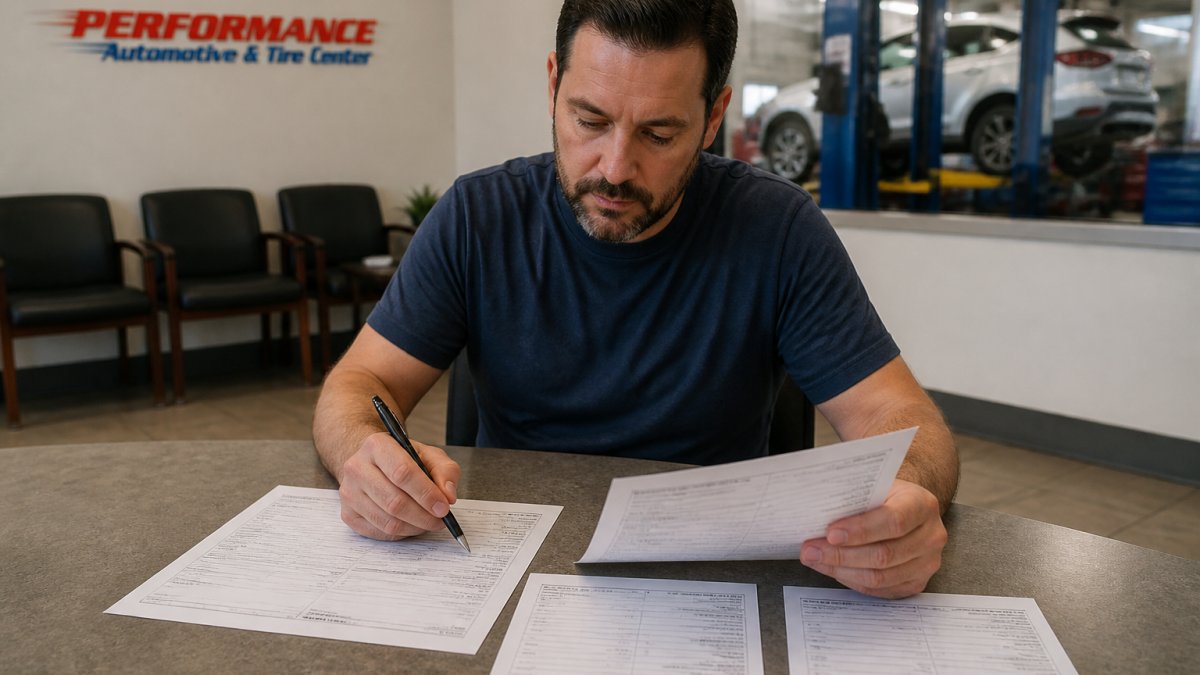
Getting multiple estimates is your strongest defense against overcharging, but only if you compare them consistently. Normalize every quote into four buckets, parts, labor, fees, and taxes, and compare each separately rather than the bottom-line total.
Step 1: Make every shop quote the same job
Describe the same symptoms to each shop and ask for a quote on the identical repair. If Shop B recommends extra work like rotors, ask why and whether they measured against the manufacturer’s minimum thickness spec, a second opinion recommending more work is useful only with a specific measurement.
Ask each shop to put the estimate in writing and to include:
- The part number and brand for every part
- Whether the part is OEM, aftermarket, or remanufactured
- The labor hours quoted and the hourly rate
Step 2: Audit the labor line
Labor is where quotes diverge most. Multiply quoted hours by the hourly rate and compare. If one shop quotes 1.5 hours and another 2.5 for the same repair, ask the higher-hours shop how they arrived at their number, many use a flat-rate labor guide, and a transparent shop will show you the listing.
Also check for duplicate labor: if the estimate charges labor to remove a component and again to access it for a related repair, ask whether the second charge should be reduced. Honest shops combine overlapping labor; aggressive shops bill it twice.
Step 3: Audit the parts line
Ask for the part number and brand, then look up that exact part at a major retailer for a baseline. Markup is legitimate, independent shops commonly mark up 20% to 50%, dealerships more, but it should be explainable.
Watch for parts substitutions on the final invoice: if the estimate specified an OEM part and the invoice shows an aftermarket equivalent at the OEM price, that is a billing problem.
Step 4: Compare the fees and taxes
Fees are small line items that add up. Shop supplies, disposal, and environmental fees can be legitimate, but they should be disclosed up front and roughly similar across shops in the same market. A large “diagnostic” or “administrative” fee not in the estimate is a red flag, and if a shop taxes labor in a state that doesn’t, ask why.
Step 5: Score the quotes side by side
Build a comparison sheet with one column per shop and rows for parts, labor, fees, tax, and grand total, plus warranty terms and whether the shop explained the diagnosis. The lowest total isn’t automatically best, a quote 10% lower with no labor warranty may cost more over time. Spot the quote out of line on a specific bucket, not the cheapest number.
Ask each shop whether the diagnostic fee is credited toward the repair if you approve the work. Many shops credit it; some do not. That single question can change the effective cost of a quote by $100 or more.
You can verify mechanic repair estimates to understand what’s reasonable for your vehicle and repair type, and compare dealer versus independent mechanic costs to understand pricing across shop types. This helps you spot when a quote is genuinely out of line versus just a different service model.
Labor Charges and Hourly Rates: What’s Fair
Labor costs often represent the largest portion of your repair bill. Understanding how shops calculate labor is essential to spotting overcharging.
Most shops charge by the hour: a brake pad replacement might be quoted as “1.5 hours of labor” at a given rate. Two issues emerge, the hourly rate and the number of hours quoted.
Hourly rates vary: dealerships typically charge more than independent shops, urban more than rural, and shops with ASE-certified technicians more than those without.
The hours quoted are where overcharging frequently happens.
Ask the shop how they calculate labor time.
Call us at 480-924-7444 today! →
Parts Pricing and Markup: Identifying Inflated Costs
Parts markup is where many shops generate profit, and this is legitimate. Shops aren’t expected to sell parts at cost.
Most independent shops mark up parts; dealerships often do too.
The problem emerges when a shop doesn’t disclose the markup or when it’s excessive even for that shop type.
Watch out: Some shops list “core charges” or “disposal fees” that aren’t explained.
Unauthorized Car Repairs and Hidden Charges
One of the clearest signs your mechanic is overcharging you is performing work you never approved. It ranges from minor upsells to major unauthorized repairs and is the most common complaint pattern in repair disputes. Catch it by auditing the invoice line by line against the estimate and what you authorized.
The typical unauthorized-work pattern
You take your car in for an oil change and brake inspection. The shop calls to say the pads are worn; you approve the pads.
Legitimate shops call before performing any work beyond what you explicitly approved, explain what they found and what it will cost, and wait for approval. Shops that perform work and then present a bill are betting you won’t dispute charges you’ve already incurred.
How to audit an itemized invoice line by line
Request an itemized invoice that breaks out every charge, then walk it in this order:
- Match the estimate to the invoice. Put the written estimate next to the final invoice and circle every line that does not appear on the estimate. Each circled line should have a matching authorization, a phone call, text, email, or signed add-on. If it does not, that is your dispute list.
- Check labor hours. If the estimate said 1.5 hours and the invoice bills 2.5, ask for the reason in writing. Legitimate reasons exist, rusted fasteners, a seized component, a discovered secondary failure, but they should be explained, not just billed.
- Check for duplicate labor. Look for two labor lines describing the same disassembly. If the shop removed a wheel to replace a wheel bearing and also billed labor to remove the same wheel for a brake job, ask whether the second charge should be reduced.
- Check parts against the estimate. Compare part numbers and brands. If the estimate specified an OEM part and the invoice shows an aftermarket part at the OEM price, ask for the difference back or an explanation.
- Check fees. Shop supplies, disposal, environmental, and administrative fees should be disclosed up front. A fee that appears only on the final invoice is a red flag.
- Check the math. Add the lines yourself. Arithmetic errors and “rounded up” totals are rare but real, and easy to dispute once you have the itemized bill.
Never authorize additional work over the phone without asking for the price and a callback number. A verbal “go ahead” is hard to document later. Ask the shop to text or email the added cost before you approve it.
Common billing red flags in practice
- Vague line items. “System diagnostics” for $150 with no description of what was scanned or what codes were found. Ask for the diagnostic report.
- Shop supplies as a percentage. Some shops charge a percentage of the total rather than a flat materials fee. Ask how the fee is calculated.
- Core charges that never get refunded. A core charge is a deposit on the old part that should be refunded when the shop returns it to the supplier. Ask whether the core charge is included and whether it will be credited.
Your consumer rights and dispute options
Repair-shop rules are set at the state level, but most states impose some combination of these requirements: a written estimate on request, authorization before exceeding the estimate by more than a set percentage, return of replaced parts on request, and an itemized invoice. Check your state attorney general’s office or consumer protection agency for the rules where you live.
If a shop will not resolve the issue, document everything, the estimate, the invoice, your authorization records, and a written summary of the phone calls, then escalate in this order:
- Talk to the shop owner or manager in writing. State the specific line items you dispute and the amount. A written complaint creates a record.
- File a complaint with your state consumer protection agency or attorney general’s office. Many accept complaints online.
- File a complaint with the Better Business Bureau. It is not a regulator, but shops often respond to BBB complaints to protect their rating.
- Dispute the charge with your credit card issuer. If you paid by card, you may have chargeback rights for unauthorized or misrepresented charges. Document the dispute in writing within the card issuer’s deadline.
- Consider small claims court. For significant disputes, small claims court is designed for exactly this kind of case and generally does not require a lawyer. Bring the estimate, the invoice, and your authorization records.
The strongest protection against unauthorized work is a written estimate plus a written authorization for any change. Ask the shop to text or email the added cost before you say yes, and keep that record until the repair is done.
How to Dispute a Mechanic Bill When Something Feels Wrong
If you’ve received a bill you believe is inflated, you have options. The process requires documentation and clear communication.
Start by requesting an itemized invoice that breaks down every charge. If the shop resists or provides vague descriptions, request specifics in writing.
Compare the final invoice to the original estimate.
Contact the shop and explain your concerns calmly and specifically: “The estimate quoted 1.5 hours of labor at $100 per hour, but the invoice shows 2.5 hours. Can you explain the additional hour?” Shops confident in their pricing will explain; defensive or dismissive shops may know they’ve overcharged.
If the shop won’t adjust the bill or explain the discrepancy satisfactorily, many states have automotive repair regulations requiring written estimates, authorization before exceeding estimates by a set percentage, and itemized invoices.
Get a Free Estimate and Honest Assessment Today
Protecting yourself from overcharging starts with finding a shop that prioritizes transparency, mechanics who explain what’s wrong, why it needs fixing, and what it will cost before they do the work.
Find an honest auto repair shop that provides clear estimates and fair pricing. When you’re ready to move forward with a new mechanic, use this guide to choose a reliable local mechanic who aligns with your values and budget.
At Performance Automotive and Tire Center, we believe vehicle owners should never wonder if they’ve been overcharged.
The difference between a shop that overcharges and one that doesn’t comes down to this: one sees you as a transaction, the other as a customer worth keeping.
Frequently Asked Questions
How can I tell if a mechanic is overcharging me?
Watch for vague estimates without itemized details, pressure to approve work before diagnosis, labor rates significantly higher than local shops, and charges for work you didn’t authorize. Request a written estimate that breaks down parts, labor hours, and diagnostic fees. Compare it with quotes from at least two other shops. Honest mechanics like those at Performance Automotive provide free estimates and transparent pricing so you can make an informed decision.
What should I do if I think a mechanic overcharged me?
First, request an itemized invoice showing all parts, labor hours, and fees. Compare the final bill against your written estimate. If charges don’t match, ask the shop to explain the discrepancy in writing. Contact your state’s consumer protection office or file a complaint with the Better Business Bureau. Many shops, including Performance Automotive, offer nationwide warranties and stand behind their work, if you believe you were overcharged, a reputable mechanic will address your concerns directly.
Is it normal for a repair bill to be higher than the estimate?
Minor increases (5-10%) can happen if hidden damage is discovered during work, but shops should call you for approval before proceeding with additional repairs. Significant jumps without authorization are a red flag. Always ask the mechanic to contact you before starting work on anything not listed in the original estimate. Transparent shops communicate clearly about scope changes and get your approval in writing before charging extra.
How do I know if an auto repair estimate is fair?
A fair estimate includes itemized labor costs with specific hours, parts prices with markup clearly shown, and diagnostic fees listed separately. Compare estimates from multiple shops, labor rates vary depending on vehicle complexity and shop location. Ask for OEM (original equipment manufacturer) part pricing versus aftermarket alternatives. Reputable shops provide free estimates so you can compare without obligation and make the best choice for your vehicle.
Stop guessing whether your repair bill is fair. Call us at 480-924-7444 today for a free estimate and honest assessment of your vehicle’s needs.
Tags: auto repair estimate red flags, how to compare auto repair estimates, how to dispute a mechanic bill, signs your mechanic is overcharging you, unauthorized car repairs