Table of Contents
- Check Credentials and Certifications
- Research Reviews and Ask for Recommendations
- Request a Written Estimate and Understand It
- Questions to Ask a Mechanic Before Repair Authorization
- Watch for Red Flags and Pressure Tactics
- Verify Warranty Coverage and Consumer Protections
- How to Find Honest Auto Repair That Fits Your Needs
- Frequently Asked Questions
Last Updated: October 11, 2026
Check Credentials and Certifications
The first step in finding honest auto repair is verifying that your mechanic has legitimate credentials. ASE certification is the gold standard in the automotive industry. It shows a technician has passed rigorous exams and meets ongoing education requirements. Look for the blue ASE badge displayed in the shop.
Don’t settle for vague claims about experience. Ask specifically how many years the technician has worked on your vehicle’s make and model. A shop that specializes in your car type will diagnose problems faster and more accurately than a generalist. Ask whether the shop is licensed by the state and insured.
Check if the business carries manufacturer certifications for brands you drive. Some shops specialize in domestic vehicles, others in imports. A family-owned shop that handles nearly every make and model gives you confidence they’ve seen your specific vehicle issues before.
Ask to see the technician’s ASE card in person. Real certifications have expiration dates and specific specialties listed. If the shop can’t produce one, that’s a red flag.
Research Reviews and Ask for Recommendations
Online reviews reveal patterns that single conversations can’t, but not all reviews carry equal weight. The key is learning to read critically rather than relying on star ratings alone.
Start by filtering for recency. A five-star review from three years ago tells you less than a three-star review from last month. Shops change ownership, hire new technicians, and cut corners over time. Look at the review date first, then read the text.
Seek detailed reviews that mention specific repairs. A review saying “great service” is less useful than one saying “they diagnosed my transmission problem accurately and didn’t push me into an unnecessary rebuild.” Specific complaints matter more than vague praise. If multiple recent reviews mention pressure to buy extra services, that’s a pattern worth noting.
Pay attention to how the shop responds to negative reviews. A defensive response, dismissing the customer or making excuses, suggests they don’t take feedback seriously. A thoughtful reply that offers to resolve the issue shows they care about customer satisfaction and stand behind their work. Shops that ignore negative reviews entirely may not monitor feedback at all.
Look for reviews that specifically mention honesty, fair pricing, or “no unnecessary work.” These phrases indicate customers felt respected and not upsold. Conversely, reviews mentioning “pressure to buy,” “overcharged,” or “work I didn’t authorize” are warning signs.
Check multiple platforms. Google Reviews, Yelp, and the Better Business Bureau each attract different reviewer populations. A shop with consistent positive feedback across all three platforms has broader credibility than one with glowing Google reviews but complaints elsewhere. The Better Business Bureau also tracks formal complaints and how shops resolve them, a metric Google doesn’t provide.
Ask friends, family, and coworkers which shops they trust, but ask the right follow-up question: “Did they try to sell you stuff you didn’t need?” That single question cuts through generic praise and gets at the core concern, honesty. Personal recommendations carry weight because your contacts have no incentive to mislead you and can speak to their actual experience.
Local community groups on social media often have active discussions about mechanics. Facebook community pages, neighborhood forums, and Reddit threads attract candid feedback. People are detailed about bad experiences and enthusiastic about shops that treated them well. These conversations reveal which shops have genuine community trust versus those with a polished online presence but spotty real-world reputation.
When reading reviews, count how many mention the same specific complaint. One person saying “overpriced” might be an outlier. Three people in the last six months saying the same thing is a pattern. Patterns matter more than individual reviews.
Request a Written Estimate and Understand It
A reputable shop provides a written estimate before starting work. This isn’t optional, it’s how honest shops operate and how you protect yourself. But a written estimate is only useful if you know how to read it.
A complete estimate has five components: the diagnosis (what’s wrong), the parts needed, the cost of those parts, the labor hours required, and the total cost. Each line item should be specific enough that you understand exactly what will be done and why.
Diagnostic fees come first. Many shops charge $75 to $150 to diagnose a problem using computer scanning equipment and technician time. This is legitimate and separate from repair costs. The estimate should clearly state whether the diagnostic fee applies to the repair cost if you authorize work, or if it’s a standalone charge.
Parts should be itemized by name and quantity. Instead of “suspension repair,” the estimate should list “front left strut assembly, OEM, $280” and “front right strut assembly, OEM, $280.” This specificity matters because you can research part prices independently.
Labor should show hours and hourly rate. A typical shop labor rate ranges from $85 to $150 per hour depending on location and shop type. If an estimate shows “2 hours labor” at $120/hour, you can see the math: $240.
Compare estimates from two or three shops if the repair is major (over $500). Wildly different prices suggest either one shop is overcharging or another is cutting corners. A $100 difference on a $1,000 repair is normal variation. A $500 difference on the same repair warrants investigation.
Watch for vague descriptions. “Engine work,” “transmission service,” or “electrical diagnosis” tell you nothing. Honest shops break down exactly what’s wrong and why each repair is needed. Ask the technician to explain each line item in plain language.
Ask about warranty on parts and labor. Most reputable shops stand behind their work with a warranty, typically 12 months or 12,000 miles on parts and labor. Some shops offer longer warranties on specific components. A shop that won’t warranty its work is signaling low confidence in quality.
Ask whether you can bring your own parts if you’ve sourced them elsewhere. Some shops allow this and charge only labor; others refuse because they can’t warranty parts they didn’t supply. Knowing this policy upfront prevents disputes later.
A written estimate is your contract. It protects you by documenting what will be done, what parts will be used, how much labor is involved, and the total cost. Never authorize work without one, and never accept an estimate you don’t understand. Ask questions until it’s clear.
Questions to Ask a Mechanic Before Repair Authorization
Before you say yes to any repair, ask these specific questions. First, ask why this repair is necessary right now. Is it a safety issue, or can it wait? Honest mechanics distinguish between urgent repairs and preventive maintenance.
Call us at 480-924-7444 today! →
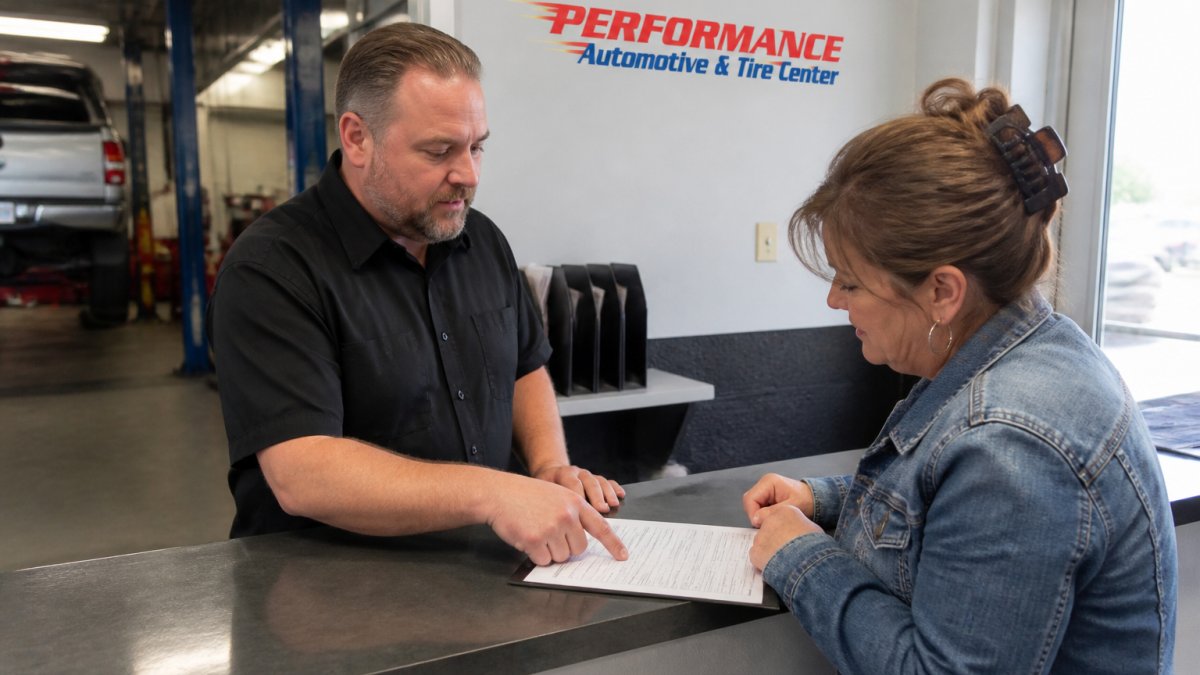
Ask what happens if you don’t do the repair. Will your vehicle be unsafe to drive? Will it cause damage to other components? An honest answer helps you decide if the repair is truly necessary.
Ask how long the repair takes. This gives you a realistic timeline and helps you spot shops that might rush through work. Ask if they’ll call you if they find additional problems during the repair, rather than just adding charges without permission.
Ask about the parts they’ll use. Will they install OEM (original equipment manufacturer) parts or aftermarket parts? Both can be fine, but you should know the difference and the cost impact. Ask if you can bring your own parts if you’ve sourced them elsewhere.
Watch for Red Flags and Pressure Tactics
Pressure to make immediate decisions is a major red flag. Honest shops give you time to think. If a technician says “this is only good today” or “I can only hold this price until tomorrow,” they’re using artificial urgency to push you into a decision.
Shops that refuse to give you a written estimate are hiding something. Transparency is fundamental to honest auto repair. If they won’t put it in writing, walk out.
Beware of shops that diagnose expensive problems without showing you evidence. Ask to see the broken part or the diagnostic scan. Photos or video of the problem build trust. Vague explanations about issues you can’t see are how dishonest shops justify unnecessary work.
Watch for shops that dismiss your concerns or previous repair history. If you say “my mechanic said this wasn’t a problem,” and they immediately contradict that without examining your records, they’re not listening. Honest mechanics respect your history and ask questions.
Pressure tactics and refusal to provide written estimates are the top indicators of dishonest shops. These shops rely on customers not knowing what they should expect. Don’t ignore these signals.
Verify Warranty Coverage and Consumer Protections
Ask what warranty covers the repair. How long is it good for? Does it cover parts only, or labor too? A shop confident in its work offers a solid warranty. Nationwide warranty coverage means your protection travels with you.
Know your consumer protections. Many states require shops to return replaced parts to you upon request. Ask your shop about this policy upfront. If they refuse to return parts, that’s suspicious.
Ask whether the shop is bonded and insured. This protects you if something goes wrong. A bonded shop has financial backing if a repair causes damage or the shop goes out of business.
Understand the dispute resolution process. If you disagree about charges or quality, how does the shop handle it? Honest shops have a clear process. Some use mediation or arbitration. Knowing this before a problem occurs gives you confidence.
How to Find Honest Auto Repair That Fits Your Needs
Combine all these steps into a vetting process. Start by checking credentials and reading reviews. Then request estimates from two shops. Compare not just price, but how each shop communicates and answers your questions.
Pay attention to how the shop treats you. Do they listen? Do they respect your time? Do they explain things in language you understand, or do they use jargon to confuse you? Honest shops make you feel welcome and informed.
Trust your gut. If something feels off, the shop seems rushed, the technician is dismissive, or prices seem unreasonably high, find another shop. Your instinct often picks up on signals your conscious mind hasn’t processed yet.
A shop that prioritizes your vehicle’s longevity over quick sales is one you can trust. When you find that shop, stay loyal. A mechanic who knows your vehicle’s history and your driving habits becomes an invaluable resource.
Frequently Asked Questions
How can I verify if a mechanic is ASE-certified?
ASE-certified mechanics display their credential cards at the shop and can be verified through the ASE website (ase.com). Look for the blue ASE logo and ask to see their current certification. Genuine ASE-certified mechanics have passed rigorous exams in their specialty areas. Many honest auto repair shops in the area employ ASE-certified technicians who take pride in their qualifications and are transparent about sharing them.
What questions should I ask before authorizing car repairs?
Ask your mechanic: What’s the specific problem and how did you diagnose it? What repair options exist and why do you recommend this one? What’s the total cost broken down by parts and labor? How long will it take? What’s your warranty on the work? Request everything in writing. These questions to ask a mechanic before repair help you understand the work and avoid unnecessary services. A trustworthy shop will answer each one clearly without pressure.
What should I look for in an auto repair estimate?
A solid estimate should list the specific repair needed, parts required with costs, labor hours and rates, and warranty details. Use auto repair estimate templates to compare shops fairly. Red flags include vague descriptions like ‘misc. repairs,’ missing labor costs, or pressure to decide immediately. Request written estimates from multiple shops before authorizing work. Transparent shops provide detailed breakdowns so you understand exactly what you’re paying for and why.
What are common red flags that indicate dishonest auto repair practices?
Watch for mechanics who recommend expensive repairs without a clear diagnosis, pressure you to decide immediately, refuse to show you the damaged part, or won’t provide a written estimate. Avoid shops that claim your vehicle is unsafe without inspection or recommend work you didn’t ask about. Honest mechanics explain problems clearly, answer your questions patiently, and never push unnecessary services. If something feels off or the estimate seems excessive, get a second opinion before authorizing work.
Finding honest auto repair in Mesa doesn’t require a degree in automotive engineering. It requires asking the right questions, checking credentials, and trusting your judgment about how you’re treated. Performance Automotive and Tire Center has built a reputation on honest assessments, fair pricing, and ASE-certified expertise. Call us at 480-924-7444 today to experience the difference working with technicians who genuinely care about your vehicle’s longevity and your peace of mind.
Tags: ase-certified mechanics near me, auto repair estimate templates, honest auto repair, how to find honest auto repair in mesa, questions to ask a mechanic before repair