
Table of Contents
- Dealer vs Independent Mechanic: What Actually Drives the Price Gap
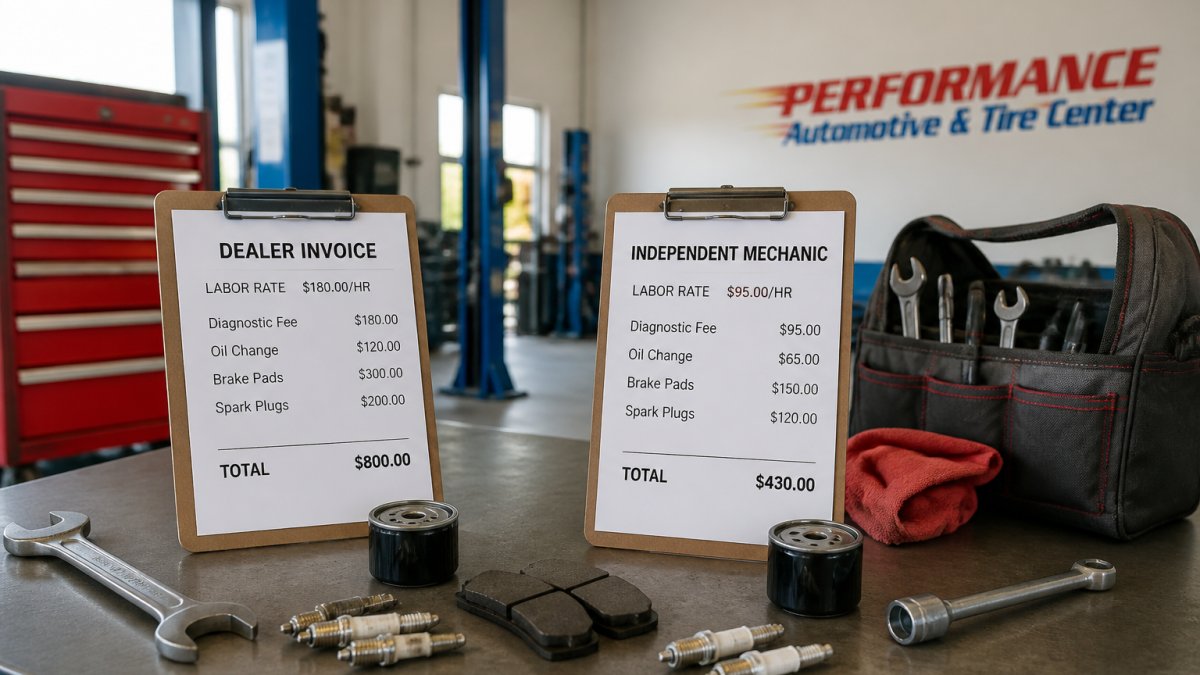
- Labor Rates: The Biggest Line-Item Difference
- Parts Markup and Shop Overhead
- Labor Rates, Parts Pricing, and Overhead: A Side-by-Side Breakdown
- How to Compare Auto Repair Estimates Line by Line
- Your Mechanic Repair Estimate Checklist: What Belongs on Every Written Quote
- Independent Mechanic Warranty vs Dealership Coverage: What’s Actually Protected
- Repairs Where Dealerships Still Win (and When Independent Shops Cost Less)
- Conclusion: Matching the Shop to the Repair, Not the Brand
- Frequently Asked Questions
Last Updated: October 7, 2026
Dealer vs Independent Mechanic: What Actually Drives the Price Gap
Any honest dealer vs independent mechanic cost comparison starts with one fact: you are paying for two different business models, not two different repairs.
Independent mechanic pricing is what an independent repair shop charges for labor and parts outside the dealer network.
The dealer isn’t necessarily overcharging for the same job, it’s charging for a building, a brand, and a training pipeline an independent shop doesn’t fund.
Labor Rates: The Biggest Line-Item Difference
Labor is where the two models separate fastest. A dealership service center typically bills a higher hourly labor rate than an independent repair shop, reflecting fixed costs the dealer carries year-round.
Dealers pay for manufacturer-mandated facilities, brand-specific diagnostic equipment, and ongoing factory training.
The labor rate is only half the story. The other half is labor time. A brake job listed at 1.5 hours is billed at 1.5 hours at both shops.
When you compare quotes, ask each shop to list the labor rate and the book hours separately. If a quote only shows a single lump sum, you can’t tell whether you’re paying for a higher rate or padded time. A shop that breaks it out is a shop that expects you to check the math.
Parts Markup and Shop Overhead
Parts pricing is the second big driver.
That default isn’t automatically wrong. OEM parts are built to the manufacturer’s spec and usually fit without surprises.
Overhead compounds the markup. A dealership service center runs on higher operating costs: larger facilities, more staff, manufacturer signage and equipment requirements, and warranty administration.
When you see a higher parts cost on a dealer quote, ask whether an OEM part is required or simply the default.
Labor Rates, Parts Pricing, and Overhead: A Side-by-Side Breakdown
The table below compares the two models on the factors that drive your total repair bill. Treat it as a framework for reading quotes, not a fixed price list, since local pricing varies.
| Cost Factor | Dealership Service Center | Independent Repair Shop |
|---|---|---|
| Hourly labor rate | Higher | Lower |
| Book labor time | Same guide | Same guide |
| Parts markup | Higher | Lower |
| Default parts | OEM | OEM or aftermarket |
| Diagnostic fee | Often charged | Often applied to repair |
| Overhead per job | Higher | Lower |
| Warranty | Manufacturer-backed | Shop or nationwide program |
The pattern is consistent: the labor rate and parts markup carry most of the price difference, while the actual repair procedure stays the same. For a deeper look at how these structures compare across service types, TrueCar’s dealer vs independent service comparison walks through the maintenance-versus-repair split.
What the Gap Looks Like on Real Repairs
The dealer-versus-independent spread is small on simple, high-volume maintenance and large on jobs where the dealer’s diagnostic equipment and OEM parts monopoly give it pricing power.
| Repair | Typical Independent Range | Typical Dealership Range | Main Driver of the Gap |
|---|---|---|---|
| Oil and filter change (conventional) | $40-$75 | $70-$130 | Labor rate plus dealer-mandated synthetic or bundled services |
| Oil and filter change (full synthetic) | $70-$120 | $110-$180 | Same, plus dealer service-package bundling |
| Front brake pads and rotors (per axle) | $250-$450 | $400-$700 | OEM rotor and pad markup, plus higher book-time rate |
| Battery replacement (standard) | $150-$250 | $220-$350 | Dealer-only battery registration on many late models |
| Diagnostic scan (check-engine light) | $75-$150, often credited to repair | $120-$200, often credited to repair | Dealer proprietary scan tools and software subscriptions |
| 60,000-mile scheduled maintenance | $400-$700 | $600-$1,000 | Dealer bundled service menus and OEM fluid pricing |
| Timing belt or chain service | $700-$1,200 | $1,000-$1,800 | Labor hours plus OEM-only tensioner and seal kits |
| Hybrid or EV high-voltage diagnostic | $150-$300 (qualified shop) | $200-$400 | High-voltage tooling, training, and calibration access |
Two things jump out. First, the absolute dollar gap is bigger on expensive jobs even when the percentage gap is similar, so the dealer premium stings most on brakes, timing service, and scheduled maintenance.
When you get a quote, ask the shop to price the same job two ways: with OEM parts and with a quality aftermarket equivalent. On brakes, batteries, and filters, the aftermarket option often closes most of the dealer-versus-independent gap on its own.
The Total Cost, Not the Estimate
The estimate is not the bill. A total-cost comparison adds four things the sticker price leaves out:
- Diagnostic fees that don’t get credited. A $150 diagnostic that isn’t rolled into the repair is $150 on top of the quote.
- Follow-up repairs found mid-job. A brake job that turns into calipers, hoses, and a fluid flush can add 40-60%. A written estimate should state how new findings get approved before the technician proceeds.
- Comeback risk. If a repair fails and the guarantee only covers the part, you may pay labor twice. A nationwide warranty program reduces that risk when you travel or move.
Add those four lines to both quotes before you decide. On a $500 brake job, a $150 uncredited diagnostic fee and a $200 mid-job addition can erase the entire independent-shop savings.
A lower labor rate and flexible parts options usually produce the savings, not a shortcut on workmanship, but only if you compare the total.
How to Compare Auto Repair Estimates Line by Line
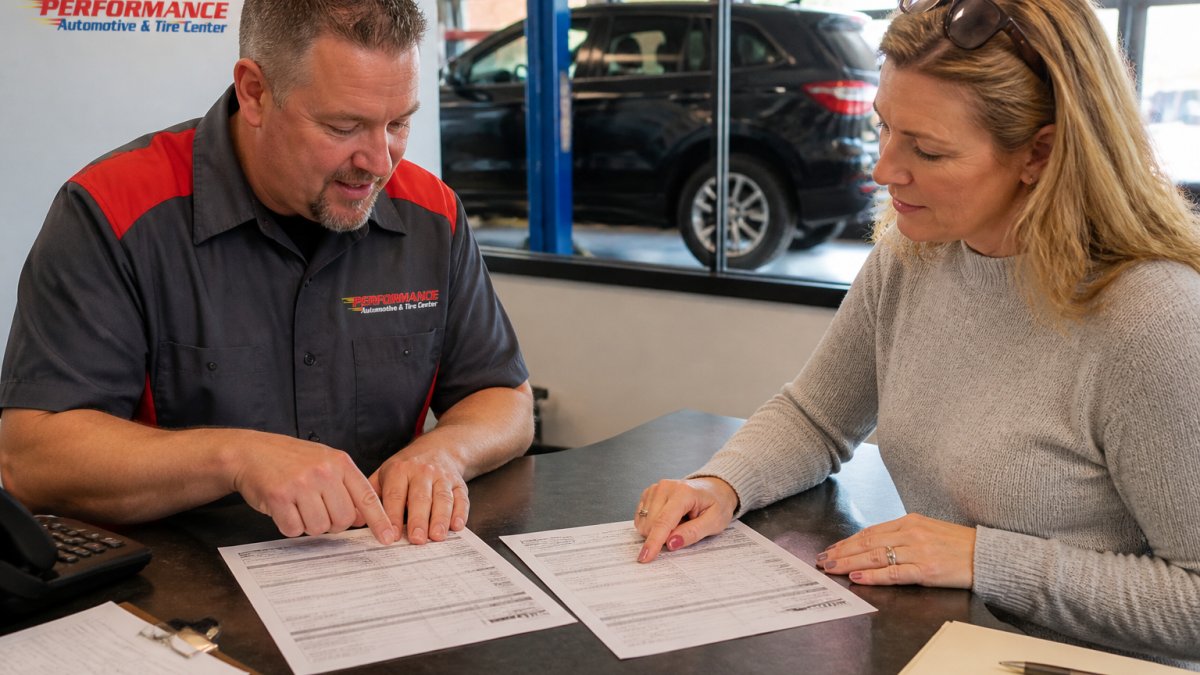
To compare auto repair estimates properly, match the two quotes line by line before looking at the totals. A lower bottom line means nothing if it’s missing a part, using a cheaper grade, or omitting a required step.
Start here:
- Labor hours: Confirm both quotes use the same book time. Fewer hours than the manufacturer guide is a red flag, not a bargain.
- Labor rate: Separate the rate from the hours to see which drives the difference.
- Parts: Check whether each quote specifies OEM, aftermarket, or remanufactured, and whether the brand is named.
A Practical Method for Reconciling Two Quotes
Most drivers compare totals and stop. The better method is a side-by-side worksheet:
- Write the job description in one sentence. “Replace front pads and rotors on a 2018 midsize sedan.” If the quotes describe different jobs, you’re not comparing anything yet.
- List every line item from both quotes in one column. Labor hours, labor rate, each part by name and number, fluids, shop supplies, tax, and fees.
- Flag anything in one quote but not the other. A missing line is usually why one quote looks cheaper.
- Check the labor hours against the published guide. Both shops should bill the same book time. If one shows 1.0 hour and the other 1.5 for the same job, ask why.
- Confirm the parts spec matches. OEM versus aftermarket, and brand name versus generic, changes price and durability. “Premium pads” without a brand is not a comparable line.
- Add the fees back in. Diagnostic, shop supplies, disposal, and environmental fees can add 5-15% to either quote.
- Compare the totals only after steps 1-6.
A quote that is $80 cheaper but omits a $60 part and a $40 fluid service is not cheaper, it’s incomplete. The line-by-line view is the only way to see that.
How to Read a Quote That Looks Too Low
A suspiciously low quote usually means one of four things:
- It’s missing a required step. Some brake jobs require new hardware, a fluid flush, or a rotor measurement. Ask the shop to confirm the full scope against the manufacturer’s maintenance schedule.
- It uses a lower-grade part. Economy pads and rotors can be fine for a low-mileage commuter but wear faster. Ask what brand and grade is quoted.
- It assumes the job is simpler than it is. If the technician hasn’t seen the vehicle, the quote may not include seized bolts, rusted lines, or a caliper that needs replacing.
How to Read a Quote That Looks Too High
A high quote isn’t automatically wrong either. Before you reject it, check whether it includes:
Call us at 480-924-7444 today! →
- OEM parts where the manufacturer specifies them (common on safety systems, sensors, and emissions components).
- A longer warranty on parts and labor than the competing quote.
- Diagnostic time credited if you approve the repair.
If it includes none of those, ask the shop to itemize and explain the difference. A shop that can’t explain its own pricing is one you can walk away from. The biggest mistake drivers make is comparing totals instead of line items.
Your Mechanic Repair Estimate Checklist: What Belongs on Every Written Quote
A mechanic repair estimate checklist is only useful if it forces the shop to commit to specifics: what will be done, what it will cost, and what happens if the job changes.
Use this checklist before you approve any repair:
- Shop name, address, and contact information
- Your vehicle’s make and model, plus the current mileage
- A plain-language description of each recommended repair
Never authorize work from a verbal estimate alone. If a shop won’t put the parts type, labor hours, and warranty terms in writing, you have no way to verify the final bill or hold anyone to the agreed scope. That gap is where surprise charges and disputed warranties come from.
If a quote is missing more than two items on this list, ask for a revised version before you hand over the keys. A shop confident in its pricing won’t hesitate to put it in writing.
Independent Mechanic Warranty vs Dealership Coverage: What’s Actually Protected
Independent mechanic warranty coverage is often stronger than drivers assume, but it works differently from a manufacturer warranty.
Dealership repairs on a vehicle still under factory warranty are backed by the manufacturer, and that coverage travels with the car.
The key is what each warranty actually covers:
- Manufacturer warranty: Covers defects in materials or workmanship on covered components, tied to the vehicle and the factory terms.
- Shop repair guarantee: Covers the specific repair the shop performed, for a stated period, usually honored at that location.
- Nationwide program: Covers a qualifying repair at participating shops, which matters if you move or travel.
Consumer Reports car repair shop survey has tracked how customers rate dealerships and independent shops on price satisfaction and trust, and the pattern is worth knowing before you decide where loyalty belongs.
One caveat: a warranty is only as good as its terms.
Repairs Where Dealerships Still Win (and When Independent Shops Cost Less)
Dealerships genuinely win on some repairs. The trick is knowing which ones.
Go to the dealer when:
- The repair requires manufacturer-specific software, security codes, or proprietary diagnostic equipment.
- The vehicle is under warranty and the repair is a covered defect.
- It’s a recall or a manufacturer service campaign.
An independent shop is usually the better call when:
- The work is routine maintenance or scheduled service.
- The repair is mechanical and well understood, like brakes, suspension, or exhaust.
- Your vehicle is older and out of warranty, where cost savings matter more than brand-specific process.
For hybrid and EV work, the deciding factor is technician training and high-voltage tooling, not the sign on the building.
This is where Performance Automotive and Tire Center fits for drivers in the area. We’re family owned and operated, staffed by ASE-certified technicians, and we back our work with a nationwide warranty and free loaner cars.
Conclusion: Matching the Shop to the Repair, Not the Brand
The right answer to the dealer-versus-independent question isn’t a brand. It’s a match between the repair and the shop best equipped to do it.
What matters most is that you can read a written estimate, separate labor from parts, and confirm what the warranty covers. That skill saves you money at either shop.
At Performance Automotive and Tire Center, we make that comparison easy.
Frequently Asked Questions
Are independent mechanics cheaper than dealerships?
Independent shops usually charge lower hourly labor and apply smaller parts markups than dealership service centers, so the same job often costs less. The gap comes from overhead: dealerships carry brand training, factory diagnostic tools, and larger facilities. Expect savings on routine work like brakes, fluids, and belts. For complex jobs, get a written estimate from both and compare the labor hours and parts lines, not just the bottom line.
Will using an independent mechanic void my vehicle warranty?
No. Federal law (the Magnuson-Moss Warranty Act) says a manufacturer cannot void your warranty simply because someone other than a dealer did the work or used aftermarket parts. The shop must use parts that meet the manufacturer’s specifications and follow the scheduled maintenance. Keep receipts showing the date, mileage, and parts used. If a failure traces back to a bad part or a botched repair, the shop’s own independent mechanic warranty should cover it.
How do I compare a dealership repair estimate with an independent shop’s estimate?
Put both quotes side by side and match them line by line: labor hours, hourly labor rate, parts numbers, and whether the parts are OEM or aftermarket. Ask each shop to note the diagnostic fee and whether it is credited toward the repair. A lower total can still hide fewer labor hours or cheaper parts. Use a checklist so you are comparing the same scope of work, not two different diagnoses.
When should I take my car to a dealership instead of an independent mechanic?
Dealerships make sense for warranty-covered repairs, manufacturer recalls, software updates, and brand-specific systems on newer or luxury vehicles. Hybrid and EV high-voltage work and advanced driver-assistance-system calibrations often require factory equipment. For routine maintenance, brakes, tires, and most out-of-warranty repairs, an ASE-certified independent shop can handle the job, often at a lower total cost and with more scheduling flexibility.
What should be on a mechanic repair estimate checklist?
Every written estimate should list the diagnosis, the specific repair, labor hours and the hourly labor rate, parts with brand and part numbers, the diagnostic fee, taxes, and the shop’s warranty terms. Ask whether the quote is a firm price or an estimate that can change if additional repairs surface. Get the final total in writing before authorizing work, and keep a copy for your records and any future warranty claim.

