
Table of Contents
- What Reliable Auto Repair for All Car Makes Actually Means
- Full-Service Repair and Maintenance Services to Expect
- Why ASE-Certified Auto Repair Technicians Change the Outcome
- Questions to Ask an Auto Mechanic Before You Approve Anything
- How to Compare Auto Repair Estimates Line by Line
- When to Get a Car Repair Second Opinion
- Warranties, Preventive Maintenance Schedules, and Post-Repair Checks
- Frequently Asked Questions
Last Updated: October 18, 2026
What Reliable Auto Repair for All Car Makes Actually Means
Reliable auto repair for all car makes is a service model in which one shop handles routine maintenance and complex mechanical work across domestic vehicles, foreign vehicles, and older models without sending you elsewhere.
The distinction matters more than it sounds.
Below, we break down what that commitment looks like in practice, how to read an estimate, and what to ask before you hand over your keys.
“All makes and models” is a claim. Ask which specific systems a shop diagnoses in-house and which it subcontracts. That single question separates a real full-service center from a generalist that farms out anything unusual.
Domestic, Foreign, and Older Vehicles Under One Roof
Coverage splits into three groups, and each brings different equipment and parts-sourcing needs. Domestic vehicles generally have the widest parts availability and the most predictable labor times.
A shop that handles all three keeps more than one scan platform on hand and maintains relationships with multiple parts suppliers. When you call, ask how they source parts for a discontinued model.
Full-Service Repair and Maintenance Services to Expect
A full-service repair center should cover the work that keeps a vehicle on the road between major failures, not just the failures themselves. The list below reflects what we consider baseline capability for any shop claiming all-makes coverage, and it is organized by the systems a shop should be able to diagnose in-house rather than sublet.
Diagnostics, Engine, Brake, Transmission, and Electrical Work
Diagnostics is the foundation. Modern vehicles run dozens of control modules, and a fault code points to a circuit, not a failed part. Good troubleshooting means testing the circuit before replacing the component.
- Engine repair: timing components, head gaskets, oil leaks, cooling system failures
- Brake service: pads, rotors, calipers, lines, and ABS diagnostics
- Transmission repair: fluid services, clutch work, solenoid and valve body issues
The National Institute for Automotive Service Excellence certifies technicians across these specific systems, which is why the credential is worth checking per area rather than as a blanket badge.
How Coverage Differs by Vehicle Type
The phrase “all makes and models” hides real differences in equipment, parts, and procedure. A shop that genuinely covers the range handles these groups differently:
- Domestic vehicles: the widest parts availability and the most predictable labor times, but older models may have discontinued modules and connectors that require salvage or remanufactured sourcing.
- Imported vehicles (European and Japanese): manufacturer-specific scan tools and fluid specifications are often mandatory. Generic equipment may read a code but cannot perform bidirectional tests, relearns, or adaptations that the repair requires.
- Hybrid and electric vehicles: high-voltage systems require separate safety training, insulated tools, and procedures that many general shops do not maintain. Ask directly whether the shop services the high-voltage battery and inverter, or only the conventional engine, brakes, and suspension.
A shop that handles all of these keeps more than one scan platform on hand and maintains relationships with multiple parts suppliers. When you call, ask two specific questions: how they source parts for a discontinued model, and which systems they diagnose in-house versus sublet. A vague answer tells you they will improvise on your dime.
A shop that quotes a transmission replacement from a single fault code, without testing solenoids, wiring, and fluid condition first, is guessing. That guess is expensive and it is yours to pay for.
What a Written Estimate Should Show
Before any of this work begins, you should receive a written estimate that separates diagnosis from repair. A useful estimate shows the diagnostic fee and whether it is credited toward the repair, the labor hours and labor rate, the parts tier quoted (original equipment, quality aftermarket, or remanufactured), any sublet items such as alignment or calibration, and the warranty terms on parts and labor.
Why ASE-Certified Auto Repair Technicians Change the Outcome
ASE-certified auto repair technicians change the outcome because certification requires passing an independent exam on the specific system being repaired, plus documented work experience.
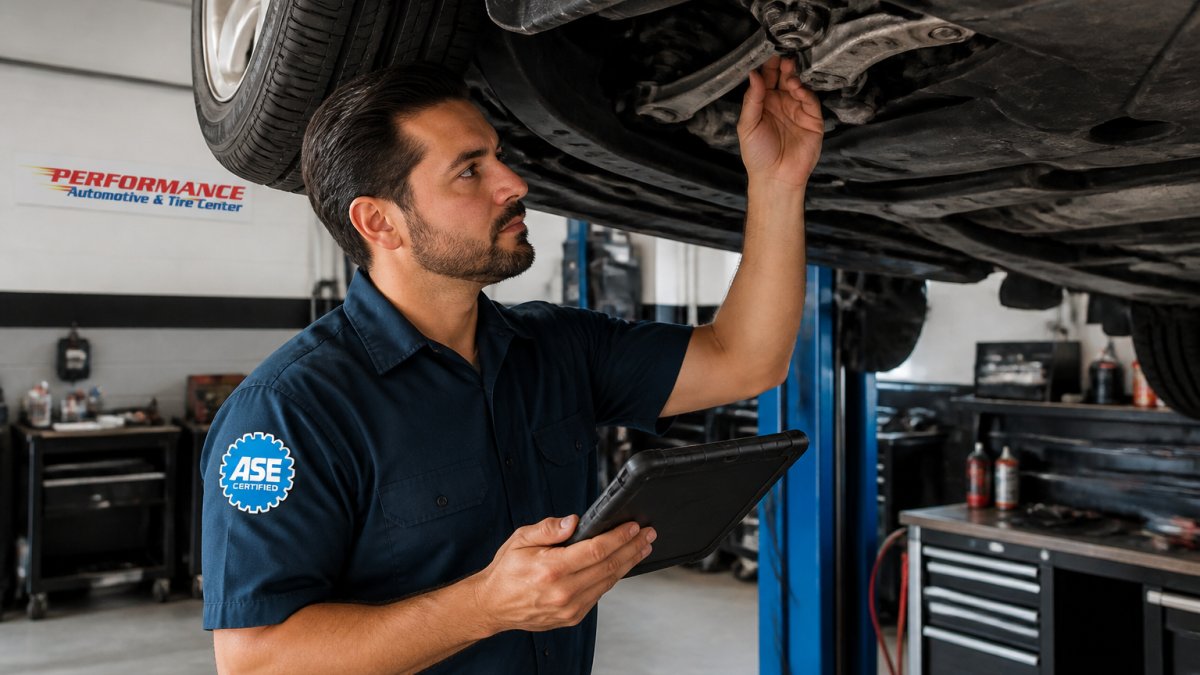
What most guides miss is that certification is system-specific and time-limited. Technicians recertify on a cycle, so the credential reflects current practice rather than a test passed a decade ago.
In practice, this shows up in misdiagnosis rates. A technician who understands how a circuit behaves under load tests the circuit.
Questions to Ask an Auto Mechanic Before You Approve Anything
Ask these questions before authorizing work, and treat evasive answers as a signal:
- What test confirmed this diagnosis, and can you show me the result?
- Is this repair maintenance, a safety issue, or a failure that can wait?
- Will you call me before doing anything beyond the original estimate?
- What happens if the repair does not solve the problem?
- Are the parts new, remanufactured, or salvage?
- What does the warranty cover, and how long does it run?
That fourth question is the one customers ask us most often, usually phrased as a worry about being sold parts they do not need. A shop confident in its diagnosis will stand behind it. One that will not answer is telling you something.
How to Compare Auto Repair Estimates Line by Line
Comparing auto repair estimates means matching labor hours, labor rate, parts quality, and diagnostic fees across quotes, not just the bottom line. A cheaper total often hides a shorter labor time, a lower-grade part, or a diagnostic charge that reappears later.
Use this structure when you sit down with two or three written estimates:
Call us at 480-924-7444 today! →
| Line Item | What to Check | Why It Matters |
|---|---|---|
| Diagnostic fee | Charged once or per visit? | Repeat fees inflate the real cost |
| Labor hours | Matches published book time? | Short hours can mean skipped steps |
| Labor rate | Stated per hour, in writing? | Rates vary widely by shop type |
| Parts | New, reman, or salvage? | Determines lifespan, not just price |
| Sublet work | Any outsourced items? | Signals limited in-house capability |
| Warranty | Parts and labor, or parts only? | Labor is usually the larger cost |
What Drives Labor Costs and Parts Pricing
Labor cost is hours multiplied by rate, and the hours come from published labor guides that most shops use.
Parts pricing depends on tier. Original equipment parts cost more and fit exactly. Quality aftermarket parts cost less and vary by brand.
We do not publish flat pricing because the honest answer depends on your vehicle, the parts tier you choose, and what the inspection finds.
When to Get a Car Repair Second Opinion
Get a car repair second opinion when a quote involves a major component, exceeds what you expected, or arrives without a clear explanation of the test that produced it.
A second opinion is not an insult to the first shop. It is a normal step on expensive repairs, and reputable shops expect it.
The exception: safety-critical failures. If a shop tells you a brake line is rusted through or a ball joint is about to separate, do not shop the quote.
Ask the second shop one specific question: “Based on this estimate, what would you test first?” If they name the same test and reach a different conclusion, you have learned something. If they cannot explain their reasoning, you have learned something else.
Warranties, Preventive Maintenance Schedules, and Post-Repair Checks
Warranty terms decide who pays when a repair fails, and they deserve the same scrutiny as the estimate. Ask four questions before you approve work: Does coverage include labor or parts only? How long does it run, and from what date? Is it honored at other locations or only at the shop that did the work? What voids it, such as missed maintenance or work performed elsewhere?
A Practical Preventive Maintenance Schedule
Preventive maintenance intervals come from the manufacturer, not the shop, so the owner’s manual is the authority for your specific vehicle. As a general pattern that most practitioners follow when the manual is unavailable or vague:
| Interval | Typical Items to Check or Replace |
|---|---|
| Every 5,000-7,500 miles | Oil and filter, tire rotation and pressure, brake inspection, fluid level check |
| Every 15,000-30,000 miles | Engine and cabin air filters, brake fluid condition, battery and charging system test, suspension and steering inspection |
| Every 30,000-60,000 miles | Transmission fluid per manufacturer spec, coolant service, spark plugs on many engines, drive belt inspection |
| Every 60,000-100,000 miles | Timing belt on interference engines per schedule, spark plugs on longer-interval engines, differential and transfer case fluid |
| Annually, regardless of mileage | Battery load test, brake line and hose inspection, undercarriage corrosion check, safety recall lookup |
Two cautions. First, severe-service schedules in the owner’s manual shorten many of these intervals for stop-and-go driving, extreme temperatures, and towing, which describes a lot of real-world use. Second, keep the service records. That history protects resale value and supports warranty claims on the vehicle itself, and some repair warranties require documented maintenance.
Post-Repair Verification Checklist
Post-repair verification is the step drivers skip. Before you leave the shop:
- Confirm the original symptom is gone, not just that the warning light is off.
- Drive a full cycle that includes the conditions that triggered the problem, such as highway speed or a cold start.
- Check that no new noises, leaks, or warning lights appeared.
- Ask for the diagnostic printout and the parts replaced, in writing.
- Confirm the warranty terms on the invoice match what you were told.
If something feels wrong, turn around. The NHTSA safety recall database is also worth a check on any used vehicle you are about to invest in, since an open recall is free to resolve at a dealer.
Photograph your dashboard before and after the repair, including the odometer and any warning lights. It is a simple record if a dispute arises over whether a light was on when you arrived.
At Performance Automotive and Tire Center, our technicians road-test after major work and walk you through what changed.
Frequently Asked Questions
What should I look for in a reliable auto repair shop?
Look for ASE-certified technicians, written estimates before work begins, and a clear warranty on parts and labor. Ask whether the shop handles both domestic and foreign vehicles, and confirm it has the diagnostic equipment for your make. Check how it communicates: a reliable shop explains what it found, shows you the failed part when possible, and does not pressure you into add-on work. Reviews mentioning honest assessments and fair pricing are a stronger signal than a low advertised rate.
What does an ASE-certified technician mean?
ASE certification means a technician has passed standardized tests from the National Institute for Automotive Service Excellence and meets a required work-experience threshold. Certification is voluntary and must be renewed, so it signals verified knowledge rather than self-declared skill. Shops often display certificates in the customer area. When you ask questions to ask an auto mechanic about credentials, ask which specific certifications apply to your repair, since specialists exist for brakes, electrical systems, and engine performance.
How do I compare auto repair estimates from different shops?
Put the estimates side by side and match them line by line: parts (new, remanufactured, or aftermarket), labor hours, diagnostic fees, and taxes. A cheaper total often means fewer parts replaced or a shorter labor allowance, not a better deal. Confirm each shop lists the same repair for the same symptom. Ask whether the diagnostic fee is credited toward the repair. If one estimate is dramatically lower, ask what it excludes before deciding.
When should I get a car repair second opinion?
Get a second opinion when a quote involves a major component such as a transmission, engine, or hybrid battery, when the diagnosis seems unrelated to what you are experiencing, or when the price is far above other quotes. A second look is also reasonable if a shop recommends several unrelated repairs at once. Expect to pay a diagnostic fee at the second shop, and bring your first written estimate so the technician can review the same findings.
Is it better to take my car to a dealership or an independent repair shop?
Independent shops that service all makes and models often cost less on labor while using the same diagnostic procedures. Dealerships can be the right call for warranty work or brand-specific software updates. For routine maintenance, brake service, and most mechanical repairs, a well-equipped independent shop with ASE-certified technicians handles the job. Ask whether the shop uses OEM or quality aftermarket parts and what its nationwide warranty covers before you commit.
How can I find a repair shop that works on my car’s make and model?
Ask directly whether the shop has serviced your make and year before, and whether its scan tools cover the modules on your vehicle. Shops that advertise all makes and models should confirm coverage for European, Asian, and domestic brands, including older vehicles with discontinued parts. Request a written estimate for your specific model rather than a general quote. A shop that asks for your VIN before quoting is verifying parts fitment, which is a good sign.


