
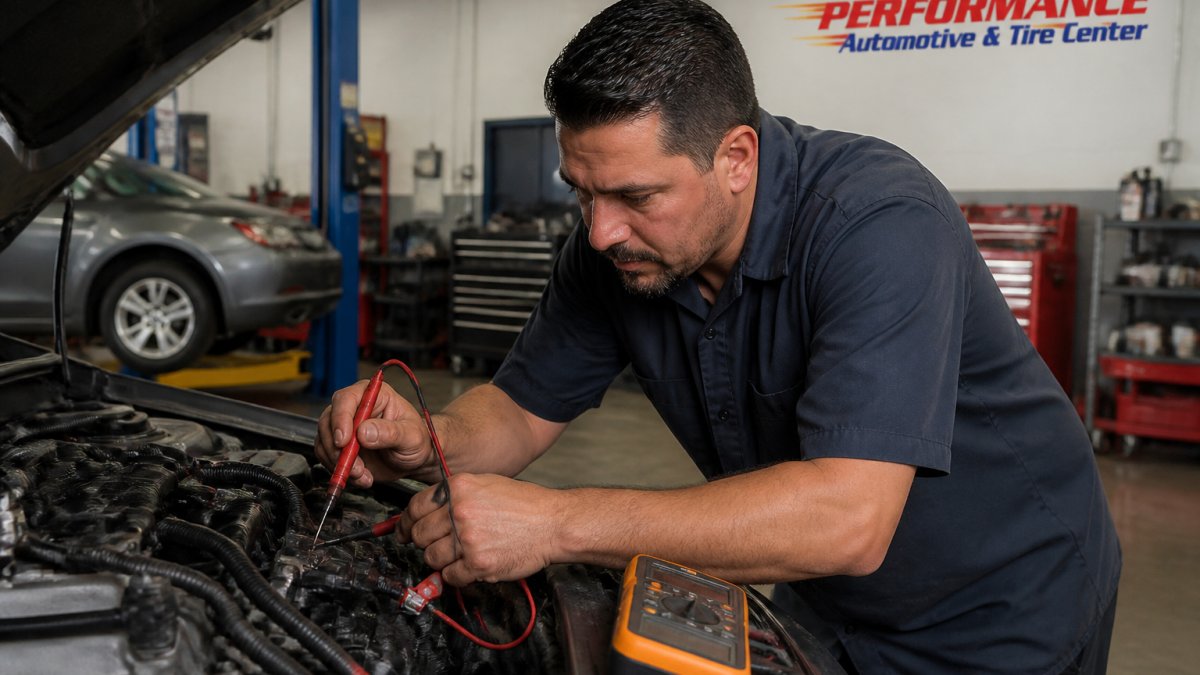
Table of Contents
- Can Independent Mechanics Fix Electrical Issues?
- Car Electrical System Diagnosis: Tools and Training That Matter
- Common Car Electrical Problems Independent Shops Handle Every Day
- How Much Do Mechanics Charge for Electrical Problems?
- Dealership vs Independent Mechanic for Car Repair: Electrical Work
- How to Choose an Independent Shop for Electrical Repairs
- Conclusion: Getting Your Electrical Issues Fixed Right
- Frequently Asked Questions
Last Updated: October 9, 2026
Can Independent Mechanics Fix Electrical Issues?
Yes, independent mechanics can fix most car electrical problems. Modern shops use the same diagnostic tools dealerships use, and many independent technicians hold the same certifications. At Performance Automotive and Tire Center, our ASE-certified techs handle many electrical issues.
The real question isn’t whether an independent shop can fix your car. It’s whether the shop you pick has the right tools and training for your specific vehicle. That’s what this guide covers.
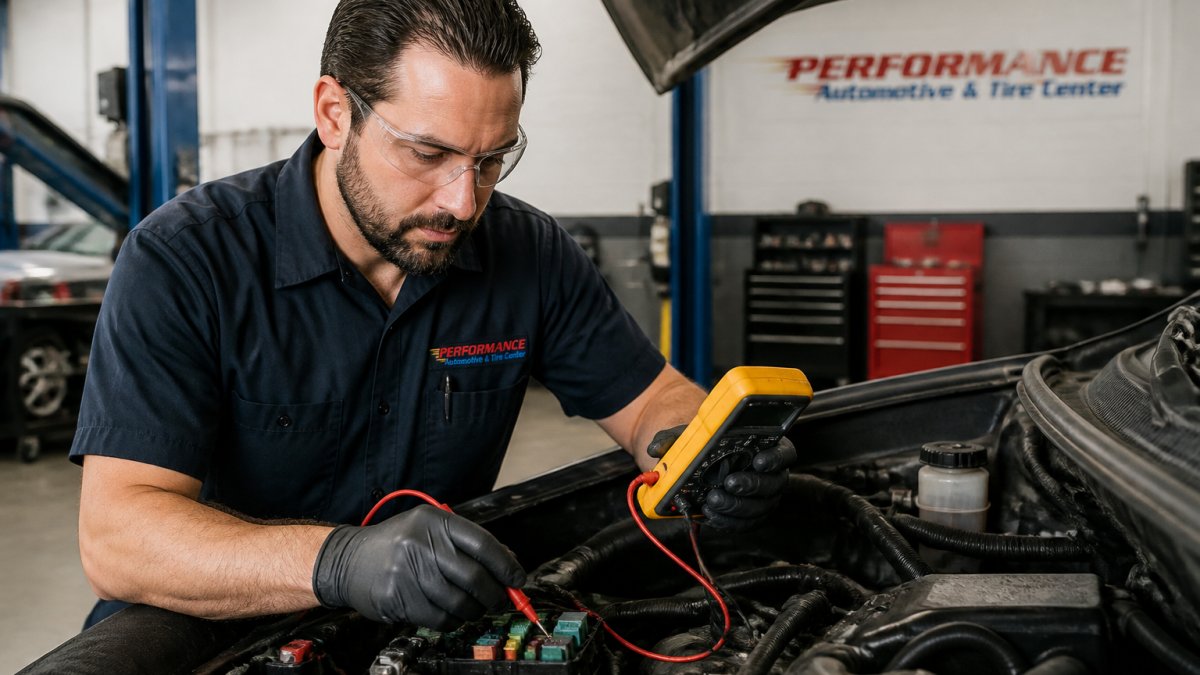
Car electrical work has a reputation for being mysterious. It isn’t. It’s a process of testing circuits, reading fault codes, and replacing failed parts. Any shop with an OBD-II scanner, a quality multimeter, and a technician who understands voltage drop testing can diagnose most issues.
Here’s what separates a shop that can help from one that can’t:
- An OBD-II scanner that reads live data, not just codes
- A technician trained in circuit testing and wiring repair
- Access to wiring diagrams for your make and model
- Patience to trace a short circuit instead of guessing
The short answer: yes, and often at a lower cost than a dealership.
Car Electrical System Diagnosis: Tools and Training That Matter
Diagnosing car electrical problems comes down to tools and training. But “independent mechanic” is a broad term, and the shop that changes your oil may not be the shop that can trace a CAN-bus communication fault. The distinction matters before you hand over your keys.
General repair shops handle the everyday electrical work: batteries, alternators, starters, fuses, relays, and basic sensor replacements. They own an OBD-II scanner, a multimeter, and a test light. For a no-crank condition or a charging system warning, that’s usually enough.
Dedicated auto-electric specialists go further. They invest in oscilloscopes to watch signal waveforms, breakout boxes to test circuits under load, and manufacturer-level scan tools that can command modules, run bidirectional tests, and read live data across multiple control units. They subscribe to wiring diagram databases and keep up with network topology changes. When a fault is intermittent, or when multiple modules stop communicating at once, this is the shop you want.
The core tools are straightforward. An OBD-II scanner pulls diagnostic trouble codes from the car’s computer. A multimeter measures voltage, amperage, and resistance. A test light checks for power at fuses and relays. A power probe sends current through a circuit to find breaks. An oscilloscope shows the actual shape of a signal over time, which is how you catch a sensor that tests fine with a multimeter but drops out under load.
Training matters just as much. ASE certification includes an electrical specialty (currently ASE E2, Electrical/Electronic Systems). It tests a technician’s knowledge of the automotive electrical system, from the battery and starter motor to the CAN-bus network that links electronic control units.
Modern vehicle architecture raises the bar. A CAN-bus system lets dozens of modules share data over a two-wire network. A single shorted module can take down the whole bus, and the symptom may look like a transmission problem when the real fault is a chafed wire behind a kick panel. Infotainment systems, driver-assist cameras, and body control modules add more nodes and more potential failure points. A technician trained on 1990s vehicles may be excellent at basic circuits but lost when a gateway module needs to be initialized after replacement.
That’s why the right question isn’t “can an independent shop fix it” but “does this shop have the tools and training for my vehicle’s architecture.”
Ask any shop one question before you book: “Do you have the wiring diagram for my year, make, and model?” A shop that says yes can trace a fault. A shop that says no is guessing.
ASE certification and test series descriptions
Common Car Electrical Problems Independent Shops Handle Every Day
Most electrical faults fall into a handful of categories. An independent shop sees them constantly.
Parasitic battery drain tops the list. Something stays on after the car shuts off and kills the battery overnight. Finding it means measuring amperage draw and pulling fuses one at a time.
A failing alternator stops charging the battery while you drive. The dash light comes on, then the car dies.
A bad starter motor clicks or does nothing when you turn the key.
A short circuit blows the same fuse again and again. That takes continuity testing and patience.
Sensor failures trigger warning lights and rough running. A bad oxygen sensor or crankshaft position sensor is common.
Call us at 480-924-7444 today! →
A loose ground connection causes weird, hard-to-reproduce symptoms. This one fools a lot of people.
| Symptom | Likely Cause | Typical Fix |
|---|---|---|
| Battery dies overnight | Parasitic drain | Trace draw, pull fuses |
| Dim lights, hard starts | Weak alternator | Test output, replace |
| Click, no crank | Starter motor | Replace starter |
| Same fuse blows | Short circuit | Continuity test, repair wire |
| Check engine light | Sensor failure | Scan codes, replace sensor |
How Much Do Mechanics Charge for Electrical Problems?
Electrical diagnostics pricing depends on the shop, the vehicle, and how deep the fault goes. There’s no single number, but there is a predictable structure you can plan around.
Most shops charge a diagnostic fee to find the problem. This is not a scam. Tracing an electrical fault can take an hour or more of a technician’s time with a multimeter and wiring diagram, and the shop has to pay for that time whether or not you approve the repair. A common pattern is a one-hour minimum diagnostic charge, with additional time billed if the fault is buried behind the dash or inside a harness. Some shops waive the fee if you approve the repair; others apply it as a credit toward the final bill. Ask which policy applies before you drop off the car.
Here’s what drives the total price:
- How long it takes to find the fault
- Whether the fix is a part swap or a wiring repair
- Parts cost for your specific make and model
- Whether the issue sits behind the dash, under the hood, or inside a harness
- Whether the repair requires relearning or initializing a module after replacement
A simple fuse or relay fix is quick and cheap. A wiring harness repair that requires pulling apart interior panels takes hours. A module replacement may need a scan tool to program the new part to the vehicle, which adds labor.
How to avoid a parts-swapping mechanic. A shop that guesses replaces parts until the symptom disappears. You pay for every part, including the ones that weren’t the problem. A shop that tests identifies the fault first, then replaces only what failed. The tell is in how they explain the diagnosis. Ask: “What test confirmed this part is bad?” A testing shop can describe the voltage drop, the resistance reading, or the scope pattern. A guessing shop will say something vague like “it seemed like the alternator.”
Ask for a written estimate before any work starts, and ask whether the diagnostic fee applies to the repair. If the shop can’t explain how it reached its conclusion, get a second opinion.
A low diagnostic fee can be a red flag if the shop makes up the difference by replacing parts you didn’t need. The cheapest diagnostic is not always the cheapest repair.
Diagnostic fees are standard because electrical testing takes real time. The way to protect yourself is not to avoid the fee, but to choose a shop that can explain exactly which test identified the fault.
Dealership vs Independent Mechanic for Car Repair: Electrical Work
The dealership vs independent mechanic question comes down to three things: cost, access, and convenience.
Dealerships have factory training and brand-specific tools. That helps with brand-new models or software updates. But dealerships also charge more per hour, and they may push services you don’t need.
Independent shops often charge less and give you a straight answer. A good independent shop with ASE-certified techs can handle the same diagnostics a dealer can. For older vehicles, an independent shop is usually the smarter call.
A common mistake is assuming only a dealer can read your car’s codes. Any shop with a current OBD-II scanner can pull the same diagnostic trouble codes. The difference is what the technician does next.
How to Choose an Independent Shop for Electrical Repairs
Choosing the right shop matters more than the price. Use this checklist before you book.
- Confirm the shop has ASE-certified technicians
- Ask if they have wiring diagrams for your vehicle
- Ask what the diagnostic fee covers
- Ask whether they offer a warranty on the repair
- Ask if loaner cars are available if the job takes longer
- Read reviews for honesty, not just speed
- Get a written estimate before work begins
A shop that answers these clearly is worth your business. A shop that dodges them isn’t.
Drivers with older vehicles or hard-to-trace electrical faults who want a straight answer and a fair price instead of a service upsell.
Conclusion: Getting Your Electrical Issues Fixed Right
Electrical problems scare people because they feel invisible. They aren’t. A trained technician with the right tools can trace almost any fault to its source.
The key is finding a shop that has both. At Performance Automotive and Tire Center, our ASE-certified techs diagnose electrical issues with the same equipment dealerships use. We offer FREE Estimates, FREE Loaner Cars, and a Nationwide Warranty on our work. We’re family owned, and we give honest assessments without the upselling.
Call us at 480-924-7444 today to book your electrical diagnostic.
Frequently Asked Questions
How much do mechanics charge for electrical problems?
Pricing depends on the shop’s labor rate and the complexity of the diagnosis. Most independent shops charge a diagnostic fee that often runs between $100 and $200, which may be applied to the repair if you proceed. The total cost depends on parts and labor time. For an accurate estimate, contact the shop directly and ask about their diagnostic fee and how they handle billing for electrical work.
Can an independent mechanic work on a car under warranty?
Yes, independent mechanics can perform maintenance and repairs on a car under warranty without voiding it, as long as they use appropriate parts and follow the manufacturer’s procedures. The Magnuson-Moss Warranty Act protects your right to choose your repair shop. However, warranty coverage for a specific defect may still require a dealership visit if the repair is covered. Ask your independent shop about warranty implications before booking.
What are common signs of a car electrical problem?
Common signs include a battery that drains overnight (parasitic battery drain), flickering or dim lights, a starter that clicks but won’t crank, warning lights on the dashboard, intermittent sensor failures, and blown fuses. These symptoms can point to issues with the alternator, wiring harness, ground connections, or electronic control units. A proper diagnosis with an OBD-II scanner and multimeter is needed to pinpoint the exact cause.
How do mechanics diagnose car electrical problems?
Technicians start by pulling diagnostic trouble codes with an OBD-II scanner, then perform circuit testing using a multimeter to check voltage, resistance, and continuity. They may also conduct voltage drop testing on wiring and ground connections, and use a lab scope to analyze signals from sensors and modules. The goal is to trace the fault to a specific component, wire, or connection before replacing parts.

