
Last Updated: October 30, 2026
Quick Summary
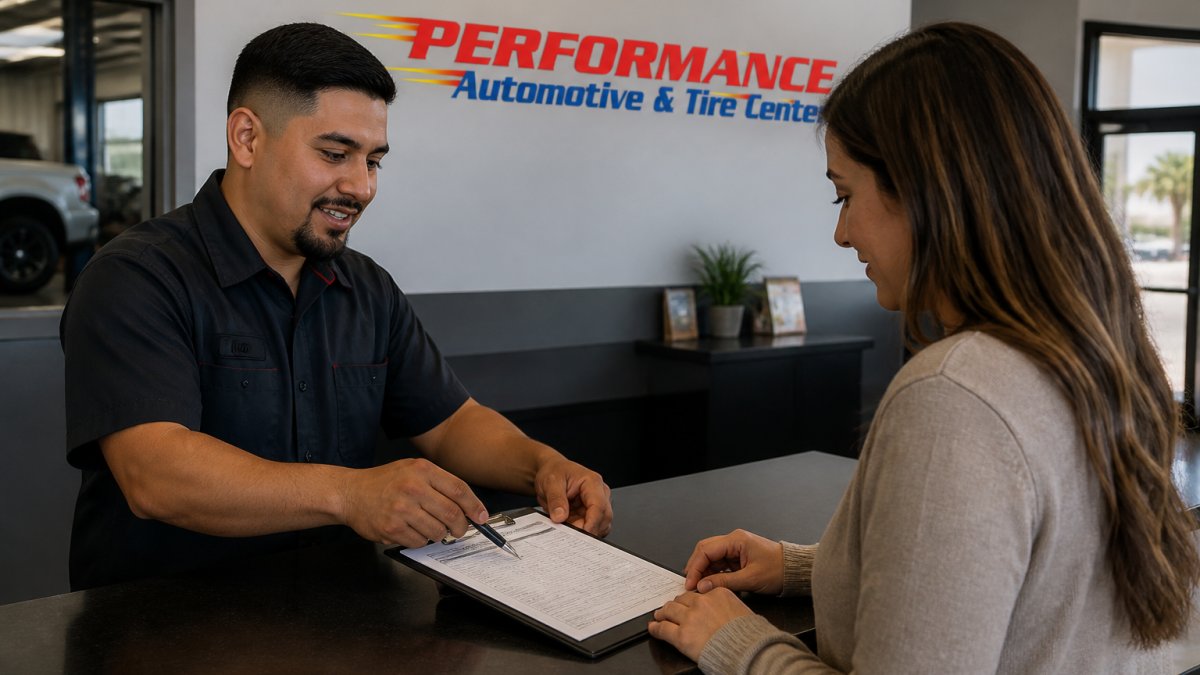
To get a car repair estimate in Mesa, gather your VIN, symptom notes, and service records, then ask the shop whether the estimate is free and whether a diagnostic fee applies. Request the estimate in writing and confirm it lists parts, labor, fees, warranty terms, and completion time before you approve any work.
- Most shops separate a free visual estimate from a paid diagnostic that uses scan tools and road tests.
- Ask whether the diagnostic fee is credited toward the repair if you approve the work.
- Compare estimates on total cost: diagnostic fee plus repair cost, minus any credit applied.
- A written estimate should state whether it is a firm quote or a preliminary estimate that can change.
- Additional work found during teardown requires your approval before the shop proceeds.
Table of Contents
- Why Getting a Car Repair Estimate in Writing Matters
- Step 1: Gather What You Need Before You Call
- Step 2: Ask for a Free Car Repair Estimate
- Step 3: Understand the Car Diagnostic Fee
- Step 4: What to Ask a Mechanic Before Repairs Begin
- Step 5: How to Compare Mechanic Estimates Fairly
- Step 6: Know What a Written Estimate Should Include
- Step 7: Book Your Estimate Appointment at Performance Automotive
- Frequently Asked Questions
Why Getting a Car Repair Estimate in Writing Matters
A written car repair estimate is a document that lists the parts, labor, and expected costs for a specific repair before any work begins. For the broader context of full service auto repair, the estimate process makes more sense once you see how inspection, diagnosis, and repair fit together.
The FTC’s consumer guidance on auto repairs makes the stakes plain: ask for a written estimate and keep a copy. Without one, you have no record of what was promised. With one, you can spot added charges, question vague line items, and compare shops on equal footing.
Below, we’ll walk through the seven steps to get a car repair estimate in Mesa, from the paperwork you gather at home to the appointment you book.
Step 1: Gather What You Need Before You Call
The fastest way to get an accurate car repair estimate is to arrive prepared.
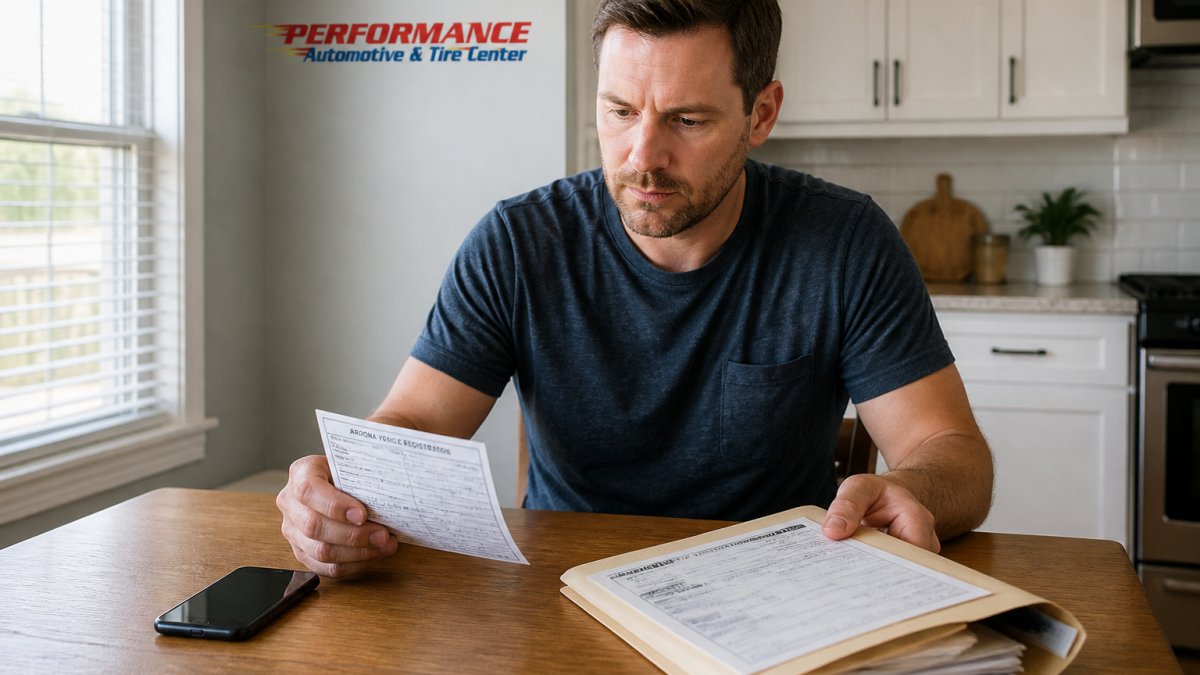
Here is what to have ready:
- VIN: Located on the driver-side dashboard or your registration. It tells the shop the exact engine and trim.
- Symptom notes: When the noise starts, whether it happens cold or warm, and any warning lights.
- Service history: Receipts from prior oil changes, tune-ups, or brake work.
A common mistake is calling with “my car makes a noise” and no details. That forces the shop to guess, and guesses turn into diagnostic fees.
Step 2: Ask for a Free Car Repair Estimate
Most shops separate two things: the estimate and the diagnosis. A free car repair estimate typically covers visual checks and a conversation about likely causes. A full diagnostic, where a technician plugs into the computer and tests components, usually carries a fee.
When you call, ask directly: “Is the estimate free, and is there a diagnostic charge if you need to dig deeper?” Getting that answer before you drive over saves arguments later.
At Performance Automotive and Tire Center, estimates are free. No pressure, no surprise line items.
Step 3: Understand the Car Diagnostic Fee
A car diagnostic fee is the charge for the time a technician spends identifying the cause of a problem, typically using scan tools and road tests.
Why does it exist? Because finding a fault in a modern vehicle takes real work.
Ask two questions about any diagnostic charge:
- Is it credited toward the repair? Many shops apply the fee to the final bill if you approve the work.
- What does it include? A scan, a road test, and a visual inspection should all be spelled out.
Watch out: a shop that quotes a repair price before diagnosing anything is guessing. Diagnostic uncertainty is real, and honest shops say so.
Step 4: What to Ask a Mechanic Before Repairs Begin
Before you approve anything, ask these questions. They separate a thorough shop from one that upsells.
- What exactly failed, and can you show me?
- Is this a safety issue or a maintenance item I can schedule later?
- Are these new, remanufactured, or aftermarket parts?
Knowing what to ask a mechanic before repairs also means watching for warning signs: vague answers, pressure to decide on the spot, or a quote that balloons once the car is on the lift. If a shop refuses to put the estimate in writing, walk away.
Step 5: How to Compare Mechanic Estimates Fairly
Comparing estimates fairly means lining up the same line items across shops: parts, labor hours, diagnostic fees, and warranty terms. A cheaper total often hides aftermarket parts, a shorter warranty, or a scope that leaves out related work the job actually requires. The goal is not to find the lowest number, it is to find the estimate that covers the same work at the same quality level for a defensible price.
A simple comparison method:
| What to Compare | Why It Matters | Red Flag |
|---|---|---|
| Parts type | New vs. aftermarket affects longevity | Unlabeled “parts” line |
| Labor hours | Shows if the job is padded | Hours far above book time |
| Diagnostic fee | Some shops credit it back | Fee with no explanation |
| Warranty | Protects you after pickup | No warranty offered |
| Written scope | Defines what’s covered | Verbal-only promise |
Normalize the scope before you compare price
The most common comparison mistake is pricing two different jobs. One shop may quote a brake job as pads and rotors; another may quote pads only and resurface the existing rotors. Those are not the same repair, and the lower number is not a better deal. Before you compare totals, write down the scope each shop proposed, which components are being replaced, which are being inspected, and which are being reused.
Compare parts quality, not just parts price
Ask each shop to label every part line as new OEM, new aftermarket, remanufactured, or salvaged. A remanufactured alternator and a new OEM alternator can differ substantially in price and in expected service life, and the estimate should say which one you are buying. If a line just says “parts,” ask for the brand and the part number. Reputable shops can supply both.
Call us at 480-924-7444 today! →
Weigh labor hours against published book time
Labor is usually quoted in hours multiplied by an hourly rate. Most shops price labor from a published labor-time guide, so two shops quoting the same repair should land in a similar range. If one estimate shows labor hours far above the others, ask the shop to walk you through the job. There are legitimate reasons for a higher labor figure, rust, seized fasteners, or additional related work, but the shop should be able to explain them before you approve anything.
Treat the diagnostic fee as part of the total
A diagnostic fee is a real cost, and whether it is credited toward the repair changes the effective price of the job. Compare estimates on the total you will actually pay: diagnostic fee plus repair cost, minus any credit the shop applies if you approve the work. A shop with a higher repair quote but a credited diagnostic fee can be the cheaper option overall.
Read the warranty terms side by side
Warranty coverage varies in duration, in what it covers (parts only versus parts and labor), and in where the work can be honored. A nationwide warranty that can be used at another shop is worth more to most drivers than a short parts-only guarantee. Ask each shop to state the warranty in writing on the estimate, and compare those terms directly rather than assuming they are equivalent.
Use a one-page comparison worksheet
For each shop, record: the scope in plain language, the parts type and brand for each line, labor hours and rate, the diagnostic fee and whether it is credited, the warranty terms, and the estimated completion time.
If you’re weighing a dealership against a local shop, a dealer vs independent mechanic cost comparison gives you a baseline for judging whether a number is fair. And when a quote looks high, our guide on how to verify mechanic repair estimates walks through sanity-checking each line.
Step 6: Know What a Written Estimate Should Include
A proper written estimate should include the shop’s contact information, your vehicle details, an itemized list of parts and labor, the total cost, and any warranty terms.
Check for these before you sign:
- Shop name, address, and phone number
- Your name and vehicle identification number
- Each part listed with its price and part type (new OEM, aftermarket, remanufactured, or salvaged)
Anything missing is a question worth asking. According to Arizona’s Attorney General consumer resources, consumers should keep copies of all repair estimates and receipts. That paper trail is your use if a dispute arises.
Firm quote versus preliminary estimate
A firm quote is a price the shop commits to for a defined scope of work. A preliminary estimate is an informed range that may change once the vehicle is inspected or torn down. Neither is dishonest, but you should know which one you are signing. Ask the shop to mark the document as firm or preliminary, and if it is preliminary, ask what specific findings would change the price and by roughly how much.
How teardown and diagnosis change an estimate
Some repairs reveal additional problems only after the technician gets inside. A brake job can uncover a seized caliper; a timing job can reveal a worn water pump that is far cheaper to replace while the engine is already apart. The right process is for the shop to stop, document the finding, and get your approval before doing additional work.
If a shop performs work beyond the written estimate without your approval, ask for the authorization record. Legitimate shops document approvals; surprise charges usually mean the approval step was skipped.
Protect yourself from surprise charges
Before you sign, confirm three things in writing: the diagnostic fee and whether it is credited, the shop’s policy on additional work discovered during the repair, and the warranty terms. Keep a copy of the signed estimate and any approval messages. If the final bill differs from the estimate, ask the shop to walk through each added line and show the authorization for it. A shop that cannot produce that record is a shop to avoid next time.
Ask about the estimated completion time
The estimate should state when the vehicle will be ready, not just what it will cost. Parts availability, shop workload, and the possibility of additional findings all affect timing. Ask whether the completion time assumes parts are in stock and whether the shop will call if the timeline changes. That single question prevents most of the frustration that comes from a repair that runs long.
Step 7: Book Your Estimate Appointment at Performance Automotive
Booking is the easy part once you know what to ask. Call ahead, describe the symptom, and confirm whether you need a diagnostic slot or just a visual estimate. Ask about loaner cars if you can’t be without your vehicle.
At Performance Automotive and Tire Center, we’re family owned and operated, staffed by ASE-certified technicians, and we offer a nationwide warranty. If you’re ready to pick a shop, our guide on how to choose a reliable local mechanic lays out the criteria that matter most.
Call 480-924-7444 to schedule your free estimate. Bring your VIN, your symptom notes, and your questions.
Frequently Asked Questions
How do I get an estimate for car repairs?
Call the shop, describe the symptoms, and ask whether they provide a free car repair estimate before any work starts. For issues that need inspection, such as a check engine light or a noise you cannot locate, the shop will usually schedule a diagnostic first. Bring your vehicle identification number, service records, and a written list of symptoms so the technician can narrow down the cause faster and give you an accurate written estimate.
Is a car repair estimate free?
Many shops, including Performance Automotive and Tire Center, advertise free estimates for work they can quote from a description or a quick visual check. A full diagnostic that requires scanning the computer or disassembling parts often carries a separate car diagnostic fee. Ask which applies to your situation before you drop the car off so there is no surprise on the invoice.
Can a repair shop charge more than its estimate?
A written estimate is a good-faith quote, not a fixed-price contract. If the technician finds additional problems once parts are removed, the final bill can exceed the estimate, but a reputable shop will call you for approval before doing extra work. Ask upfront what the shop’s policy is on additional charges, and get any approved changes in writing or by text so you have a record of what you agreed to.
Should I get more than one estimate for car repairs?
For major work such as engine repair, transmission service, or air conditioning replacement, two or three written estimates help you spot a quote that is far above or below the norm. Compare line by line: parts quality, labor hours, and whether the price includes diagnostics. For small jobs like an oil change or a tire rotation, one estimate from a shop you trust is usually enough.
Getting a straight answer about what your car needs shouldn’t feel like a negotiation. At Performance Automotive and Tire Center, free estimates, ASE-certified technicians, and loaner cars mean you get clarity without the runaround. Get started with Performance Automotive and Tire Center and book your estimate today by calling 480-924-7444.
Tags: car diagnostic fee, car repair estimate, free car repair estimate, get car repair estimate mesa, how to compare mechanic estimates, what to ask a mechanic before repairs

