
Last Updated: November 22, 2026
Quick Summary
The best alternatives to expensive tire brands are budget lines from known makers such as Cooper, Falken, General Tire, Hankook, Kumho, and Nexen, judged by their specific model rather than the name alone. Compare treadwear warranties, prorating terms, and independent wet-braking results on the exact size you need before you buy.
- Compare models in your exact size, not just brand names, since treadwear grades can differ by size.
- Divide the out-the-door price by warranted miles to get a cost-per-mile figure for each tire.
- Confirm load index and speed rating meet or exceed the placard on your driver’s door jamb.
- Check the DOT code on the sidewall to confirm the tire’s date of manufacture.
- Keep rotation receipts, since missed rotations can void a treadwear warranty claim.
Table of Contents
- Why Drivers Look Beyond Premium Tire Brands
- Best Affordable Tire Brands Worth Comparing
- Cheap Tire Brands to Avoid and Why
- How to Compare Tire Warranties Side by Side
- Tire Treadwear Rating Explained
- Matching Budget Tires to Your Vehicle and Driving Conditions
- Scheduling Your Tire Fitting and Free Estimate in Mesa
- Frequently Asked Questions
Most drivers assume a tire that costs less will wear out faster, handle worse in the rain, or leave them stranded with a warranty nobody honors. That assumption is sometimes true and often not.
This guide walks through budget alternatives to expensive tire brands, which lower-cost options deserve a look, which ones to approach carefully, and how to compare warranties and treadwear ratings before you buy. We also cover how to match a budget tire to your vehicle and driving conditions.
Why Drivers Look Beyond Premium Tire Brands
Premium tires cost more for a reason, but the gap is not always worth paying for. For many drivers, the price difference reflects brand reputation and marketing as much as engineering.
The real question is what you need the tire to do. A commuter who drives mostly on well-maintained city streets has different needs than someone towing or driving in heavy snow.
Budget tires also fill a practical gap. A single tire blowout, a sudden price spike, or a car that needs four tires at once can make a premium set hard to justify.
Best Affordable Tire Brands Worth Comparing
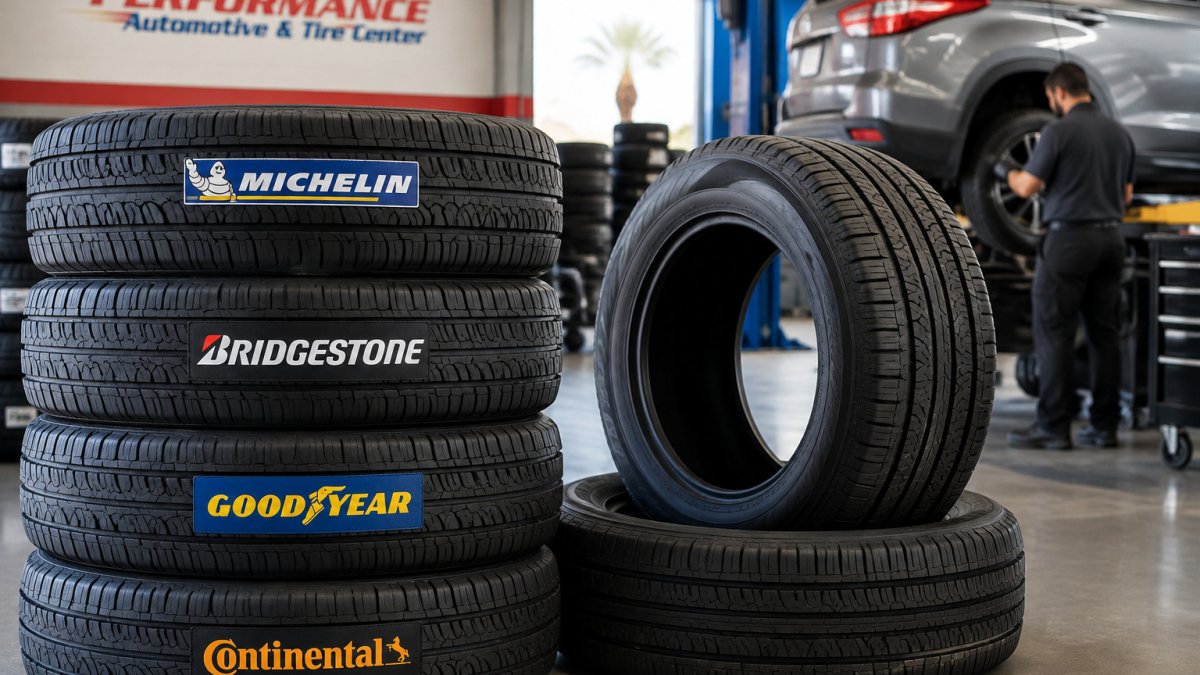
Several well-known brands offer lower-priced lines that buyers often compare against premium tires. Several tire brands, including Cooper, Falken, General Tire, Hankook, Ironman, Kumho, Nexen, and Toyo, are commonly discussed in budget-tire comparisons. Each brand has many models, so judge the specific tire, not the name alone.
| Brand | Typical budget positioning | Models commonly cited in budget discussions | What to verify before buying |
|---|---|---|---|
| Cooper | Mid-priced all-season and SUV lines | Discoverer and Evolution families | Treadwear warranty length and whether the specific size carries the same grade |
| Falken | Value performance and all-season | Ziex and Wildpeak families | Independent wet-braking results for the exact model and size |
| General Tire | Value all-season and light-truck | Altimax and Grabber families | Load range on truck sizes and road-hazard terms |
| Hankook | Broad budget-to-mid lineup | Kinergy and Ventus families | Speed rating versus your vehicle placard |
| Ironman | Low-cost all-season and truck | iMOVE and All Country families | Treadwear grade and dealer support network |
| Kumho | Value all-season and performance | Solus and Ecsta families | Prorating terms on the treadwear warranty |
| Nexen | Value all-season and SUV | N’Priz and Roadian families | Wet traction ratings and tire age on the sidewall |
| Toyo | Mid-priced all-season and truck | Extensa and Open Country families | Whether the size you need is actually in the budget tier |
Brands With Strong Budget Lineups
Recognition does not guarantee performance, so match the model to your needs. A common pattern is that a brand’s entry-level all-season and its premium touring tire share a name family but not a tread compound, so confirm the exact model number on the sidewall before you compare prices.
Retailer Low-Cost Tire Options
Some retailers run their own low-cost tire pages, and advertised offers may apply only to certain models and sizes. Before you buy, confirm which tires qualify, whether mounting and balancing are included, and what the out-the-door total will be. Ask for the price per tire in your exact size, the installation charge per tire, the disposal fee, and whether a road-hazard plan is bundled or extra. Those line items often move the real cost by a meaningful margin.
How to Compare Specific Models, Not Just Brands
The most useful comparison is apples-to-apples on the same vehicle and size. Pick two or three candidate models in your size, then line up the same data points for each: the Uniform Tire Quality Grading treadwear, traction, and temperature grades; the load index and speed rating; the treadwear warranty in miles; the road-hazard terms; and any independent test result for that exact model. Where independent testing exists, compare wet stopping distance and subjective ride and noise scores rather than marketing claims. Where it does not, treat the brand’s own claims as unverified.
When a Premium Tire Is Worth the Extra Cost
A budget tire is usually the better value for commuting, fair-weather driving, and vehicles that see moderate annual mileage. A premium tire can justify its price when you regularly drive in severe snow or ice, tow or haul near your vehicle’s limits, cover high annual mileage where tread life dominates total cost, or need a specialized performance or off-road capability. If none of those apply, the budget model with a solid warranty and a good wet-braking result is often the smarter buy.
Cheap Tire Brands to Avoid and Why
Not every inexpensive tire is a bargain. Some budget tires cut corners on tread compound, belt construction, or quality control, which can show up as faster wear, longer stopping distances, or poor wet grip.
Watch for these warning signs when you shop:
- No treadwear warranty or a very short one. A low or missing mileage warranty can signal that the manufacturer does not expect the tire to last.
- No model name or size listed clearly. Vague listings make it hard to verify performance.
- A price far below every other tire in the same size. Extremely low prices often come with tradeoffs that show up later.
- Unfamiliar brands with no independent test data. Without test results, you cannot confirm how the tire behaves.
Avoiding a bad tire does not mean avoiding budget brands entirely. Review the warning signs of overcharging and wrong-product sales at budget shops to spot trouble early. It means checking the specific model before you commit.
How to Compare Tire Warranties Side by Side
A tire warranty is one of the best ways to compare value across brands, but the details matter more than the headline number. Look at the treadwear warranty, the road hazard coverage, and the conditions attached to each. The goal is to translate the fine print into a dollar figure you can compare across models.
Compare these items for each tire you consider:
- Treadwear warranty length. Usually stated in miles. Longer is generally better, but only compare warranties for the same tire type. A 60,000-mile all-season warranty and a 60,000-mile all-terrain warranty are not equivalent claims.
- Prorating terms. Many treadwear warranties are prorated, meaning you receive partial credit toward a new tire after the tread wears out early. Read how the credit is calculated. Prorated warranties typically credit the unused portion of the warranted miles against the replacement price. See exactly what is and isn’t covered before you choose.
- Road hazard coverage. Some warranties cover punctures or damage from road debris, often for a limited period. Check whether the coverage is included or sold separately, the maximum number of years, and whether it covers mounting and balancing on the replacement.
- Conditions and exclusions. Look for requirements such as regular tire rotation, documented maintenance, or proper inflation. Missing these can void the claim. Keep your rotation receipts.
Turning Warranty Terms Into a Cost-Per-Mile Figure
The clearest way to compare a budget tire against a premium one is cost per mile of warranted tread life. Divide the out-the-door price of the tire by the warranted miles. A tire that costs less but carries a much shorter warranty can cost more per mile than a slightly pricier model with a longer one. Run the same math for the premium tire you were considering, then weigh the difference against the performance you actually need. This is the calculation most brand-comparison articles skip, and it is the one that changes the answer.
Total Cost of Ownership Beyond the Warranty
The purchase price and warranty are only part of the story. Add installation, balancing, alignment if needed, disposal fees, and any road-hazard plan. Then factor in rotations, which are usually required to keep the warranty valid, and the expected replacement interval based on the treadwear grade and your annual mileage. A tire that lasts 20,000 miles longer can offset a higher sticker price over the life of the vehicle. Fuel economy also shifts with rolling resistance, though the effect is usually small compared with tread life and purchase price.
How to Verify a Budget Tire Is Safe and Suitable
Before you rely on any warranty, confirm the tire meets your vehicle’s requirements. Check the load index and speed rating against the placard on the driver’s door jamb or the owner’s manual; both must meet or exceed the specification.
Ask whether the warranty is backed by the manufacturer and where you can file a claim. Learn how to verify quotes and terms before trusting a shop or product claim. A warranty you cannot easily use is worth little.
Tire Treadwear Rating Explained
The Uniform Tire Quality Grading system, required on passenger tires sold in the United States, includes a treadwear grade. The number is a relative indicator, not a mileage promise.
Use the treadwear number to compare tires within the same brand line or the same category. Do not treat it as a universal measure across all manufacturers, since test conditions and reporting can differ. Combine the treadwear grade with the warranty and real-world reviews for a fuller picture.
Matching Budget Tires to Your Vehicle and Driving Conditions
The right budget tire depends on your vehicle and where you drive. A tire that works well for a compact sedan in Arizona may not suit an SUV that sees snow in the mountains.
Consider these factors:
- Load index and speed rating. These must meet or exceed the vehicle manufacturer’s specification. Check the tire placard on the door jamb or owner’s manual.
- Tire type. All-season tires suit most drivers. All-weather or winter tires matter if you regularly drive in snow or ice.
- Driving conditions. Frequent highway driving rewards tires with stable handling and low road noise. City driving may put more emphasis on tread life and low rolling resistance.
- Climate. Hot pavement wears tires faster. Heavy rain or snow puts more demand on wet and winter traction.
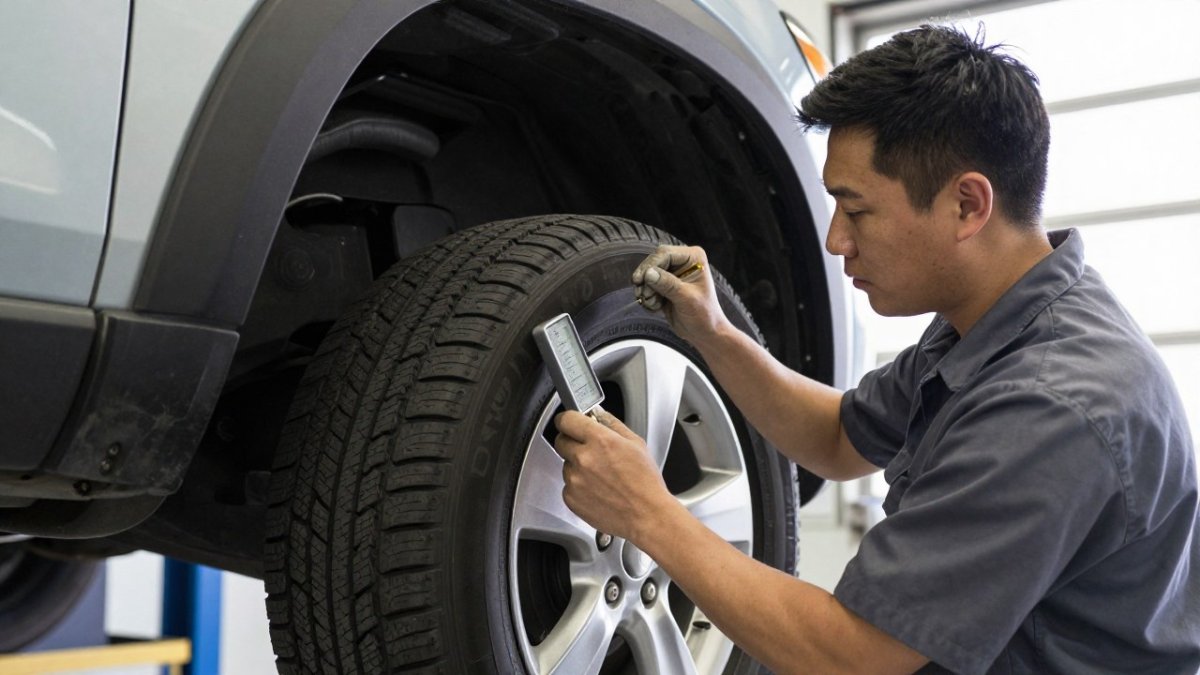
A mechanic can measure tread depth and check wear patterns to tell you whether your current tires are worn unevenly, which can point to alignment or inflation issues that shorten any tire’s life.
Scheduling Your Tire Fitting and Free Estimate in Mesa
Choosing the right budget tire is only half the job. Proper mounting, balancing, and alignment make a big difference in how long the tire lasts and how it performs. Read what repairs and fitting actually cost in Mesa and how to judge a quote before you book.
If you are weighing a few budget options, bring your vehicle in for a free estimate. Follow the step-by-step process for getting a repair estimate in Mesa to know what to expect. Call 480-924-7444 to schedule your free estimate today.
Frequently Asked Questions
What are the best affordable alternatives to premium tire brands?
Brands such as Cooper, Falken, General Tire, Hankook, Kumho, Nexen, Toyo and Ironman are commonly named in budget-tire comparisons. Start with the tire size and driving conditions you need, then compare warranty length, treadwear ratings and price per tire across two or three models. Pricing varies by tire and retailer, so get current quotes from the seller before deciding.
Are cheaper tire brands safe?
A lower price does not automatically mean a tire is unsafe, but safety should be verified rather than assumed. Check that the tire carries the correct load index and speed rating for your vehicle, look for a current DOT date code, and ask about wet braking and tread life. A reputable installer can confirm fitment before you buy.
Do expensive tires last longer than budget tires?
Not always. Tread life depends on the specific model, how the tire is rotated and inflated, and the driving you do. Compare the treadwear rating and the mileage warranty for each model rather than relying on the brand’s reputation. Ask your technician to check tread wear at each rotation so you can see real results.
Which affordable tire brands are best for SUVs?
The best choice depends on the SUV’s load rating, the all-season or all-weather needs of your region, and your driving habits. Compare SUV-specific models within each brand, check load index and warranty terms, and confirm the size is listed for your vehicle. Call 480-924-7444 for a free estimate.


