
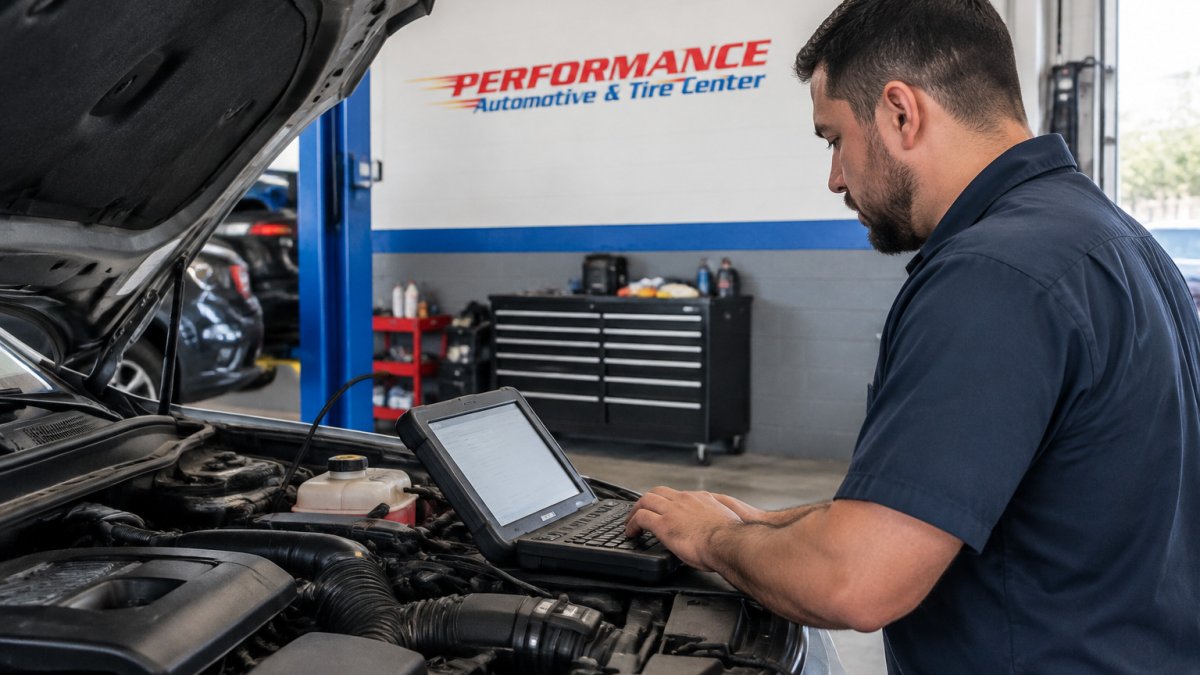
Last Updated: November 12, 2026
Quick Summary
Expert car diagnostics in Mesa AZ starts with a warning light treated as a question, not an answer. A technician scans for codes, tests the affected system with live data, isolates the fault, and confirms the repair, typically in 1 to 2 hours. This process finds the root cause instead of guessing at parts.
- A diagnostic trouble code names the system that detected a fault, not the component that caused it.
- Bring your key, registration, recent repair receipts, and a clear description of when the symptom appears.
- Professional diagnostics typically take 1 to 2 hours depending on complexity.
- Clearing a code to make the light go away erases freeze-frame data and usually brings the light back.
- Ask for the diagnostic fee, expected time window, and credit policy in writing before authorizing work.
Table of Contents
- Why Expert Car Diagnostics in Mesa AZ Beats Guesswork
- What to Bring and What to Tell Your Technician Before Testing
- Step by Step: What Happens During Professional Car Diagnostics
- Check Engine Light Diagnosis: Reading Codes Without Guessing
- Automotive Electrical Diagnostics for Intermittent and Strange Symptoms
- What Affects Car Diagnostic Test Cost and Fee Policies
- How to Choose a Qualified Diagnostic Technician
- Expert Car Diagnostics Mesa AZ Reviews and What They Tell You
- Frequently Asked Questions
Why Expert Car Diagnostics in Mesa AZ Beats Guesswork
Expert car diagnostics in Mesa AZ starts with a simple premise: a warning light is a question, not an answer. At Performance Automotive and Tire Center, we treat every check engine light as the beginning of an investigation, not a reason to start swapping parts. That distinction matters more than most drivers realize.
Here is what most guides get wrong. They tell you to buy a cheap code reader, look up the code, and replace whatever part the internet blames. That approach fails constantly. A diagnostic trouble code tells you which system detected a fault, not which component caused it.
The National Highway Traffic Safety Administration tracks safety defects and recalls tied to exactly these systems, which is one reason proper fault identification matters beyond your wallet. Below, we’ll walk through what a real diagnostic process looks like, what it costs and why, and how to pick a technician who finds the root cause instead of the nearest symptom.
What to Bring and What to Tell Your Technician Before Testing
The most useful thing you can bring is a clear story. When did the warning light appear? Does it flash or stay steady? Does the symptom show up cold, hot, at highway speed, or only on turns? Write it down before you arrive.
Bring your key, your registration, and any recent repair receipts. If another shop already replaced a part for this same problem, say so. That history changes the diagnostic path, and hiding it wastes everyone’s time.
Then answer honestly:
- What fuel grade do you use?
- When was the last oil change and tune-up?
- Has the car been in an accident or had flood exposure?
- Does the problem happen more in rain or heat?
A common mistake is describing only the light and not the behavior. A steady light and a flashing light mean very different things, and a technician who knows the pattern can narrow the search before touching a scan tool.
Step by Step: What Happens During Professional Car Diagnostics
Professional car diagnostics follows a repeatable sequence: verify the complaint, scan for codes, test the affected system with live data, isolate the fault, and confirm the repair. Skipping any step is how misdiagnosis happens.
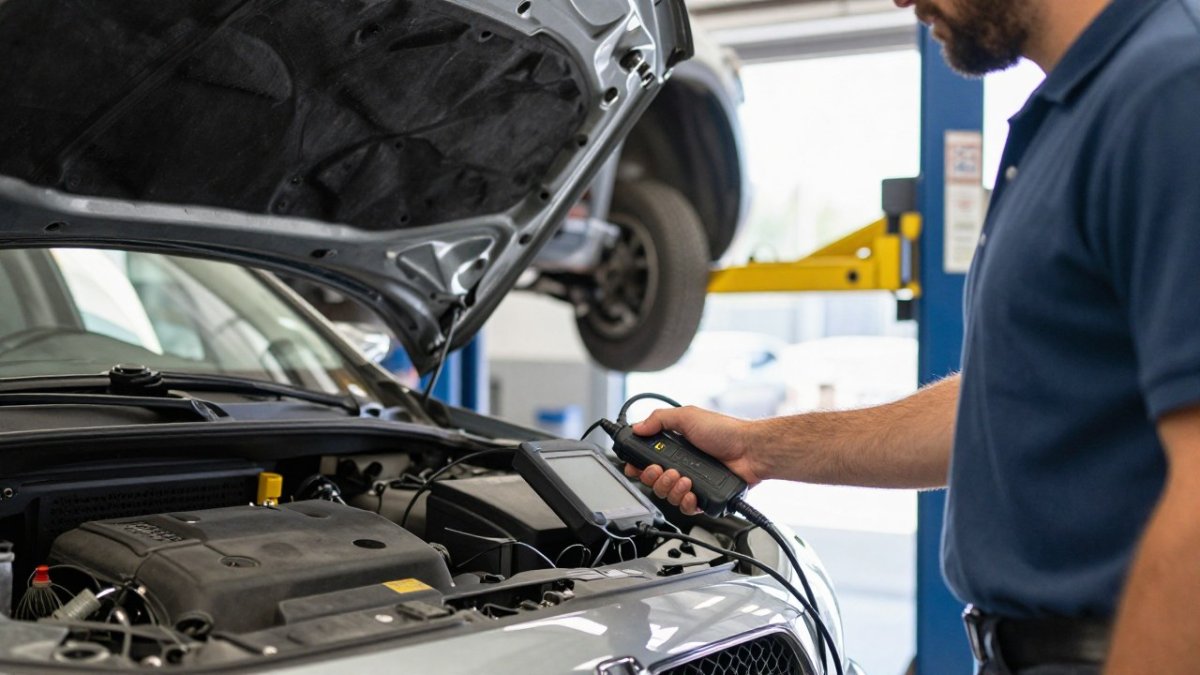
Total time: typically 1 to 2 hours depending on complexity. Difficulty: professional.
Code Reading, Live Data, and System Testing
Code reading is the entry point, not the finish line. A scan tool pulls stored and pending codes from the vehicle’s computers, then the technician watches live data: sensor voltages, fuel trim, misfire counters, and readiness monitors. This is where a good technician separates signal from noise.
System testing comes next. That may mean a smoke test for vacuum leaks, a voltage drop test on a ground circuit, or a lab scope reading on an injector. The scan tool points at a neighborhood; system testing finds the house.
From Fault Identification to Root Cause
Fault identification names the circuit. Root cause names the reason. A misfire code on cylinder three might trace back to a worn plug, a failing coil, a stuck injector, or a chafed wire harness. Each has a different repair and a different price.
Repair verification closes the loop. After the fix, the technician clears codes, runs the vehicle through a drive cycle, and confirms the monitors reset. If the light returns, the diagnosis wasn’t finished.
Here is the sequence a professional diagnostic follows, along with the typical time it takes.
| Step | What happens |
|---|---|
| Verify the complaint | Confirm the symptom and conditions with the driver |
| Scan for codes | Pull stored and pending codes from the vehicle’s computers |
| Test with live data | Watch sensor voltages, fuel trim, misfire counters, readiness monitors |
| Isolate the fault | Smoke test, voltage drop test, or lab scope reading |
| Confirm the repair | Clear codes, run a drive cycle, confirm monitors reset |
| Total time | Typically 1 to 2 hours depending on complexity |
Check Engine Light Diagnosis: Reading Codes Without Guessing
Check engine light diagnosis means interpreting codes as clues within a system, never as a parts order. A P0420 code, for example, flags catalyst efficiency below threshold. It does not automatically mean you need a catalytic converter. An exhaust leak, a bad oxygen sensor, or an engine misfire can trigger the same code.
Manufacturer-specific codes add another layer. Generic OBD-II codes cover emissions-related faults, but body, chassis, and manufacturer codes often require enhanced scan tools and factory service information. That’s a real limitation of budget code readers, and it’s why some problems need a shop with better diagnostic equipment.
Watch out: clearing a code to make the light go away doesn’t fix anything. It erases the freeze-frame data a technician needs and usually guarantees the light comes back, often at the worst possible moment.
Automotive Electrical Diagnostics for Intermittent and Strange Symptoms
Automotive electrical diagnostics exists because electrical faults rarely behave. A flickering dash light, a radio that cuts out over bumps, a battery that drains overnight: these are the cases where guesswork fails hardest.
Electrical testing works by elimination. Technicians check battery health and charging voltage, then perform voltage drop tests across grounds and power feeds. Parasitic draw testing finds what’s draining the battery while the car sits. Wiring inspection looks for chafed insulation, corroded connectors, and rodent damage, which is more common than drivers expect.
Intermittent faults are the hardest. They may not appear during a shop visit, so a good technician documents conditions and may use data logging to catch the fault in the act. If you’re dealing with gremlins like these, our guide on how to troubleshoot car electrical system problems walks through the deeper process before you book a diagnostic.
What Affects Car Diagnostic Test Cost and Fee Policies
Car diagnostic test cost varies with the time and equipment a problem demands, not with a flat menu price. A straightforward code scan and quick verification takes far less time than an intermittent electrical fault that requires hours of circuit testing.
Diagnostic pricing policies vary between shops, so ask for the fee structure in writing before any work begins. Neither is wrong, but the difference changes your out-of-pocket cost, so get the policy in writing before anyone touches the car.
What moves the price:
- How many systems are involved (a single powertrain code versus a body, chassis, and network fault)
- Whether the fault is constant or intermittent, since intermittent faults can require data logging and a return visit
- Whether manufacturer-specific software and tools are required for enhanced codes
- Whether a road test or drive cycle is needed to confirm the repair
- Whether the diagnosis includes a visual inspection on a lift or underhood tear-down
A practical way to budget: ask for a diagnostic estimate in writing that states the fee, the expected time window, and whether the fee is credited toward the repair. Then ask what happens if the technician cannot reproduce the fault. A shop that answers all three clearly is usually pricing honestly.
Once you have an estimate, our article on how to verify mechanic repair estimates shows how to check it line by line, including how to separate diagnostic time from parts and labor.
How to Choose a Qualified Diagnostic Technician
Choosing a qualified diagnostic technician comes down to credentials, equipment, and how they explain the process. An ASE-certified technician has passed standardized testing on the systems they diagnose. A Master technician has gone further, certifying across multiple repair areas.
Ask three questions, and judge the answers against these criteria:
- What diagnostic equipment do you use, and can you read manufacturer-specific codes? A shop that relies only on a generic OBD-II scanner will miss body, chassis, and enhanced manufacturer codes. Look for a shop that names its scan tools and subscribes to factory service information.
- Will you explain the root cause before recommending parts? A strong answer describes the test that isolated the fault, not just the part that failed. If the explanation is “the code said so,” keep looking.
- What happens if the repair doesn’t fix it? A shop with a real diagnostic process will stand behind the diagnosis and re-test rather than charge you again for the same symptom.
Two more signals separate a diagnostician from a parts swapper. First, ask whether they perform verification after the repair: clearing codes, running a drive cycle, and confirming the monitors reset. Second, ask how they handle intermittent faults that don’t appear during the visit.
Watch out: a low hourly rate can hide a technician who lacks the equipment for your vehicle. The cost of a missed diagnosis is the second repair, not the first invoice.
If you’re weighing an independent shop against the dealer, our piece on whether independent mechanics can fix electrical issues covers what to expect. And if you’d rather start from a vetted list, here are 8 trusted ASE-certified shops in Mesa to compare before you commit.
Expert Car Diagnostics Mesa AZ Reviews and What They Tell You
Expert car diagnostics Mesa AZ reviews are most useful when you read for patterns, not stars. Look for repeated mentions of honest assessments, clear explanations, and repairs that held up. One glowing review is noise; ten reviews praising the same quality is a signal.
Our customers say it plainly. Sandra S. called it “great, quick service.” Marrianne and Randall M. described us as “auto mechanics you can actually trust.” Tony and his staff earned a mention for giving “an honest assessment and fair price for the work needed.”
If you want to compare shops across the East Valley, this guide to the best rated auto repair shops in Mesa puts reviews in context so you can weigh them side by side.
A warning light you don’t understand is a decision you shouldn’t postpone.
Frequently Asked Questions
How much does a full car diagnostic cost?
There is no single national figure because car diagnostic test cost depends on the shop, the type of vehicle, and how deep the testing goes. A basic code reading takes minutes, while drivability and electrical diagnostics that involve live data, sensor testing, and wiring inspection take far longer. Many shops apply the diagnostic fee toward the repair if you approve the work. Ask about the fee policy and whether it is credited before you book.
Can a diagnostic scan identify the exact problem with my car?
A scan tool reads diagnostic trouble codes, but a code points to a system or circuit, not a failed part. For example, a misfire code can come from a spark plug, an ignition coil, a vacuum leak, or wiring. That is why professional diagnostics pairs code reading with live data, sensor testing, and visual inspection. Treating the code as the diagnosis is how parts get replaced unnecessarily.
How long does a car diagnostic usually take?
A simple code reading and quick inspection can take under an hour. A full diagnostic with test drives, live data review, and electrical testing often runs several hours, and intermittent problems may need the vehicle longer so the fault can be reproduced. Ask for a time estimate when you schedule, and mention any deadline so the shop can plan around it.
Is there any place that does free car diagnostics?
Free code readings are common at parts stores, but that is a scan, not a diagnosis. It tells you a code number, not the root cause or a repair recommendation.


