
Last Updated: November 24, 2026
Quick Summary
A tire pressure light that stays on after a fill usually means one or more tires are still underinflated, or the system has not yet updated its readings. Check all four tires cold against the doorjamb sticker, then drive a while or reset the system. If the light returns, suspect a slow leak or a sensor fault.
- Check all four tires plus the spare when cold, meaning parked three hours or driven under a mile.
- Find the recommended pressure on the sticker on the driver-side doorjamb.
- Many vehicles clear the light after a short drive, while others need 10 to 20 minutes at moderate speed.
- Resetting does not fix a real leak or sensor fault, so do not reset repeatedly.
- A light that returns twice after a verified cold fill should be inspected by a professional.
Table of Contents
- How to Check Pressure in All Four Tires Safely
- How to Reset TPMS After Adding Air
- How Long for Tire Pressure Light to Turn Off
- Steady vs. Flashing TPMS Light: What Each Means
- Tire Pressure Sensor Fault Symptoms and When to Suspect One
- Booking a TPMS Check at Performance Automotive and Tire Center
- Frequently Asked Questions
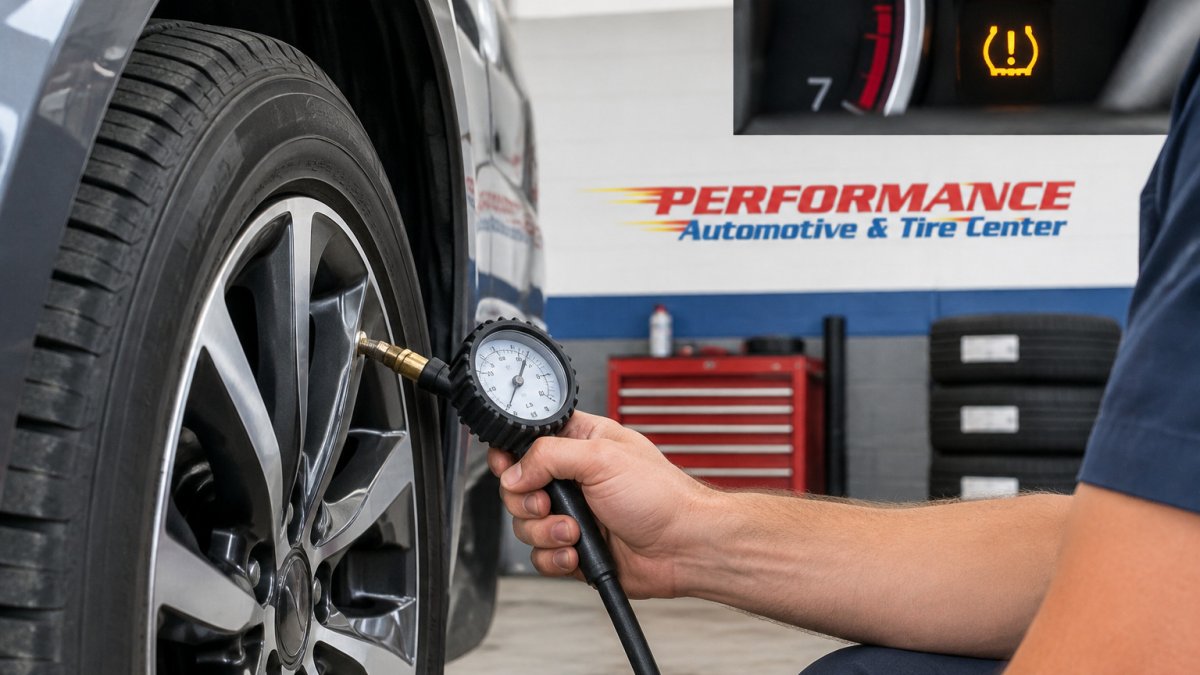
Your tire pressure light stays on after a fill for a few common reasons. The most likely cause is that one or more tires are still below the recommended pressure, or the system has not yet updated its readings. This is a normal part of how the Tire Pressure Monitoring System, or TPMS, works. This warning light often comes on after a quick air-up at the gas station. Below, we walk through how to check your tires, reset the system, and know when a sensor needs attention.
The TPMS is a system that monitors the air pressure in each tire and alerts you when pressure drops too low.
Here is what usually causes the light to stay on:
- One tire is still underinflated, even after a fill
- The system has not had time to recalibrate
- The TPMS needs a manual reset
- A slow leak or puncture is lowering pressure again
- A sensor has a fault or a dead battery
Watch out: Do not assume the light is just a glitch. If the light stays on and a tire looks low, drive gently and check the pressure as soon as possible.
How to Check Pressure in All Four Tires Safely
Check all four tires plus the spare when you suspect a pressure problem. If you find a tire losing air or damaged, learn how to patch a tire on the sidewall safely. Check when the tires are cold, meaning the car has been parked for at least three hours or driven less than a mile. Heat from driving raises the reading and can hide a low tire.
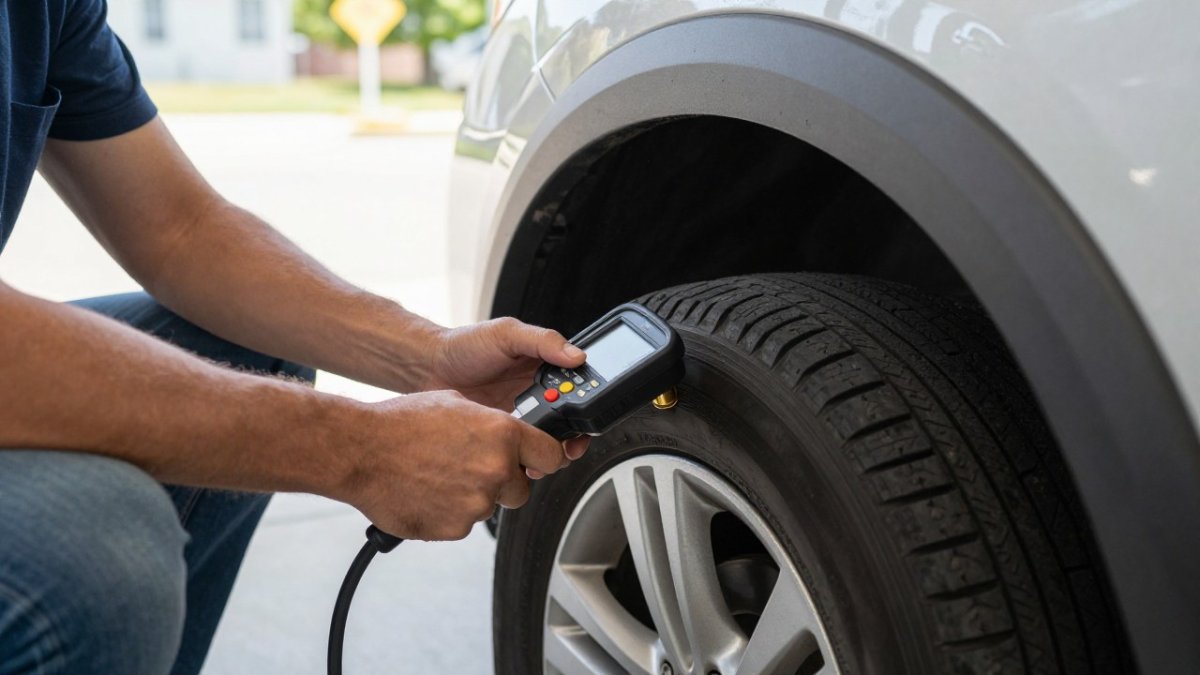
Find the recommended pressure on the sticker on the driver-side doorjamb. The owner’s manual lists the same number.
Follow these steps:
- Remove the valve cap and press the gauge firmly onto the valve stem
- Read the PSI and compare it to the doorjamb number
- Add air in short bursts, then recheck
- Put the valve cap back on when you finish
- Repeat for every tire, including the spare if your vehicle has one
A digital gauge gives the most accurate reading. Gauges can vary, so a digital gauge you trust is a good tool to keep on hand.
How to Reset TPMS After Adding Air
Once every tire is at the recommended cold pressure, the system usually needs a reset to clear the warning. Many vehicles clear the light on their own after a short drive. If the light stays on, reset it manually, but the procedure is not the same on every vehicle, and using the wrong method can leave the light on even when the pressure is correct.
Know Which TPMS You Have First
There are two system types, and the reset differs:
- Direct TPMS uses a battery-powered sensor in each wheel that broadcasts a pressure reading. Most vehicles have this. Reset is done with a button, a menu, or a relearn tool.
- Indirect TPMS has no wheel sensors. It infers low pressure from wheel speed differences measured by the anti-lock brake system. Reset is usually a button or menu command that stores the current rolling circumference as the baseline.
Check your owner’s manual to confirm which system your vehicle uses before you start. To catch pressure and sensor issues early, see how to schedule car maintenance without missing service. A procedure written for a direct system will not work on an indirect one, and vice versa.
Using the Reset Button or Vehicle Menu
Some vehicles have a TPMS reset button, often under the steering wheel, in the glove box, or near the fuse panel. The common pattern is to turn the ignition on with the engine off, hold the button until the light blinks or a chime sounds, then release and drive. Other vehicles reset through the info display, usually under Settings or Vehicle Information.
A few vehicles require a specific drive cycle to finish the reset, often 10 to 20 minutes above a set speed. If you reset in the driveway and never drive, the light may stay on simply because the relearn never completed.
Sensor Relearn After Tire Service
If a wheel was removed, rotated, or replaced, the sensors may need to be relearned to the vehicle’s module. This is different from a simple reset. Relearn often requires a scan tool or a magnet-based procedure, and the order in which you trigger each wheel matters.
Spare Tires and Indirect Systems
Some vehicles monitor a full-size spare, and a low spare can trigger the light even when all four road tires are correct. Check the spare if your vehicle has a monitored one. On indirect systems, a mismatched tire size, uneven wear, or a tire replaced with a different brand can change rolling circumference enough to set a false warning, the system is comparing wheel speeds, not measuring pressure directly.
Watch out: Resetting the system does not fix a real pressure problem. If the light returns after a correct fill and a completed relearn, stop resetting and diagnose the cause, a leak, a sensor fault, or a communication problem, before you assume the system is just stubborn.
How Long for Tire Pressure Light to Turn Off
The light usually turns off within a few minutes of driving once the pressure is correct. Some vehicles need 10 to 20 minutes of driving at moderate speed before the system updates. Cold weather can also slow the update, since pressure drops as temperatures fall.
If the light still shows after a 20-minute drive, the system may need a reset or a sensor check. A light that stays on for days after a correct fill points to a problem worth checking.
Steady vs. Flashing TPMS Light: What Each Means
A steady light and a flashing light mean different things, and the difference should change what you do next. The steady light is the most common warning and usually means one or more tires are low on air. A flashing light, often followed by a steady light, usually signals a fault in the system itself, a sensor that is not communicating, a failing sensor battery, or a module problem. Flashing warnings are less common and generally call for a professional diagnostic rather than another trip to the air pump.
Here is a quick guide:
| Light Behavior | Common Meaning | What to Do |
|---|---|---|
| Steady | Low tire pressure | Check all tires cold and add air |
| Flashing, then steady | Sensor or system fault | Schedule a diagnostic check |
| Stays on after reset | Leak, sensor, or communication problem | Work through the decision path below |
What to Do When the Light Returns After Resetting
This is the situation that frustrates most drivers: you filled the tires, reset the system, and the light came back. Rather than resetting again, work through this order:
- Recheck pressure cold. Wait at least three hours or drive less than a mile, then check all four tires plus the spare against the doorjamb placard. A tire that dropped again points to a leak.
- Look for a slow leak or puncture. A nail, a bad valve stem, or a corroded wheel bead can lose a few PSI over days, enough to retrigger the light without a visible flat. Soapy water on the valve and bead can reveal a slow leak.
- Rule out temperature swing. A 10°F drop in ambient temperature can lower tire pressure by roughly 1 PSI. If the light returns on the first cold morning after a warm fill, temperature may be the cause, not a leak.
- Suspect the sensor or communication. If pressure holds steady across several cold checks but the light keeps returning, the sensor, its battery, or the module communication is the likely culprit. That is a diagnostic job, not a reset job.
Watch out: Do not keep resetting a light that returns. Each reset clears the warning without fixing the cause, and a slow leak that goes unaddressed can turn into a blowout at highway speed. If the light returns twice after a verified cold fill, treat it as a real fault and have it inspected.
Tire Pressure Sensor Fault Symptoms and When to Suspect One
A sensor fault is a likely cause when the light stays on even though all four tires hold the correct pressure. Common signs include a flashing light, a light that returns after a reset, or a warning on the dash that appears only after the car starts.
Sensors run on small batteries that wear out over time. Read how car electrical system problems are diagnosed to see how faults like this are traced. Most sensors last several years, but a dead battery means the sensor cannot report pressure. Damage from road debris or tire service can also break a sensor.
Watch for these symptoms: if you are unsure whether a general shop can handle this, see whether independent mechanics can fix electrical issues.
- The light flashes for several seconds at startup
- The light returns after you reset the system
- One tire shows a reading that does not change
- The light stays on even after a verified correct fill
If you see these signs, have the sensors tested rather than replacing them by guesswork.
Booking a TPMS Check at Performance Automotive and Tire Center
If your light stays on after a fill and a reset, a professional check can find the cause quickly. Performance Automotive and Tire Center in Mesa offers free estimates, so you know the cost before any work begins. Learn how to get a car repair estimate in Mesa before you book. Our ASE-certified technicians check the pressure, test the sensors, and tell you what they find.
Call us at 480-924-7444 today to schedule your TPMS check.
Frequently Asked Questions
How long does it take for a tire pressure light to go off after filling?
In many vehicles the light turns off after a short drive, often within about 20 minutes at steady speeds above 15 to 20 mph, once the TPMS sensors send fresh readings. If the light is still on after a drive of that length, reset the system manually using the method in your owner’s manual. A light that stays on after both driving and a reset usually points to a leak, a low tire you missed, or a sensor problem that needs a professional check.
Can an auto parts store reset my TPMS light?
Some auto parts stores offer free tire pressure checks and may be able to read TPMS codes with a scan tool, but resetting the light depends on the vehicle. Many cars reset through a dashboard button or menu setting that you can use yourself. Other models need a specialized TPMS tool to relearn sensor IDs. If the reset does not work, a tire shop or repair facility with TPMS diagnostic equipment can confirm whether a sensor has failed.
Should I keep driving if the tire pressure light stays on?
You can usually drive a short distance to a gas station or tire shop, but do not ignore the warning. A steady light means at least one tire may be underinflated, which raises the risk of overheating, poor handling, and tire damage. Check all four tires with a gauge and inflate them to the recommended cold pressure listed on the driver-side doorjamb placard. If a tire keeps losing air, or the light flashes before staying on, have the system inspected before driving long distances.
How do I know if a tire pressure sensor is faulty?
A faulty TPMS sensor often causes the light to flash for about a minute at startup and then stay on. Other signs include a warning that appears on only one wheel, readings that do not change after you add air, or a message on the dash saying the system is not functioning. Sensor batteries typically last several years, so an older sensor failing is common. A tire shop can read the sensor IDs and status with a TPMS tool to confirm the fault.


