Last Updated: November 17, 2026
Quick Summary
You generally cannot patch a tire on the sidewall safely for regular road driving. The sidewall flexes constantly, so a sidewall patch tends to loosen or fail over time, and industry repair standards limit permanent repairs to the tread area.
- Industry repair guidelines limit permanent repairs to the tread area and exclude the sidewall and shoulder.
- A small-looking sidewall cut can hide deeper damage to the internal reinforcing cords.
- Holding air after a sidewall repair proves the hole is sealed, not that the tire is structurally sound.
- Do not drive on a tire with a visible bulge or exposed cords, even slowly.
- Get a professional inspection to determine whether the tire needs replacement.
Table of Contents
- Can You Patch a Tire on the Sidewall?
- What Causes a Hole in a Tire Sidewall
- Why Sidewalls Are Not Safe to Repair for Road Use
- Temporary Tire Sidewall Repair and Its Limits
- Tire Sidewall Patch Kits: Why They Fall Short
- What to Do Right After a Sidewall Puncture
- Booking a Professional Tire Inspection in Mesa
- Frequently Asked Questions
Can You Patch a Tire on the Sidewall?
Most tire shops will tell you the same thing: you generally cannot patch a tire on the sidewall in a way that is safe for regular road driving. A sidewall puncture is one of the few tire damage types where the standard repair does not apply, and trying to fix it yourself can leave you stranded or worse.
Here is the short answer. The sidewall flexes constantly as the tire rolls. A patch or plug cannot hold up to that movement, so it tends to fail over time. That is why repair standards focus on the tread area and not the sidewall.
A new tire costs money, and a small hole can look like it should be an easy repair. But the safe answer is usually replacement, not a patch.
What Causes a Hole in a Tire Sidewall
A sidewall puncture usually comes from an object that cuts or pierces the rubber on the side of the tire. Common causes include:
- Curbs, especially when you park or turn sharply against them
- Potholes that hit the tire at speed
- Sharp debris like metal fragments, glass, or construction material
- Rocks kicked up on gravel or unpaved roads
- Under-inflation, which makes the sidewall bend more and more easily damaged
Unlike a nail in the tread, a sidewall puncture often comes from a side impact. That impact can also damage the internal reinforcing cords that give the tire its strength. You may not see all of that damage from the outside.
Watch out: a small-looking cut can hide much deeper damage to the cords underneath. Do not judge the severity by the size of the visible hole alone.
Why Sidewalls Are Not Safe to Repair for Road Use
The sidewall is a structural part of the tire, not a wear surface. It carries the vehicle’s load, absorbs impacts, and flexes thousands of times per mile as the tire rolls. A repair in that zone has to survive constant bending and heat cycling, and most patch and plug materials are not engineered for that.
The tread area is different. It is thick, relatively flat, and reinforced to resist punctures. That is why industry repair standards draw a hard line at the tread. Industry repair guidelines generally limit permanent repairs to the tread area and exclude the sidewall and shoulder. The reason is mechanical: a repair in a flexing zone can separate from the tire casing, and a separated patch can leak or fail suddenly.
Here is what that means in practice:
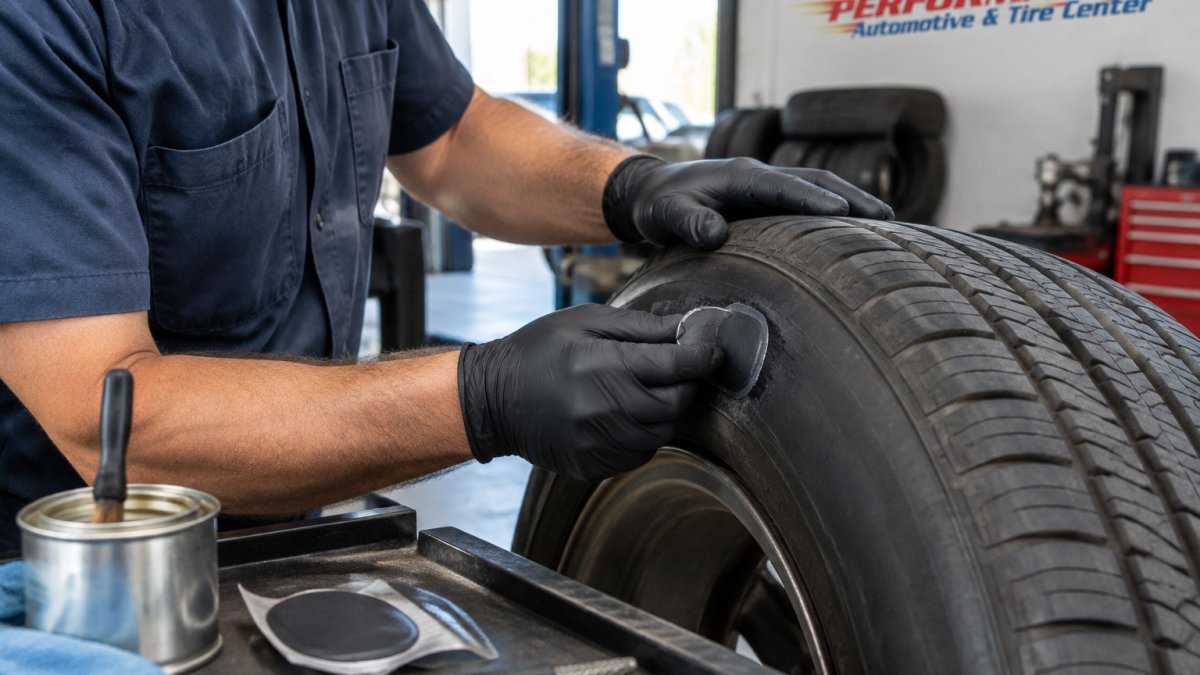
- The patch can loosen or peel. Sidewall flex works the adhesive and the patch edge until it lifts.
- Air can leak slowly. A slow leak leaves you with low pressure, which builds heat and weakens the tire further.
- Heat accelerates failure. Driving flexes the sidewall and generates heat; a marginal repair degrades faster than the tire around it.
- A sudden failure can cause loss of control. A sidewall blowout at speed is harder to manage than a tread puncture.
Many repair shops will decline to fix a sidewall puncture because it falls outside industry repair standards. A shop that offers to patch a sidewall is either using a temporary measure or ignoring the guideline, and neither is a permanent fix.
Watch out: a tire can hold air after a sidewall repair and still be unsafe. Air retention proves the hole is sealed, not that the tire has regained its structural strength.
Temporary Tire Sidewall Repair and Its Limits
Some people try a temporary fix to get home or to a shop. A temporary repair may hold air for a short time, but it is not a permanent solution.
A temporary repair is meant to buy you time. It is not meant to keep you driving at highway speeds for weeks. Treat any temporary fix as a short-term step, not a long-term one.
Keep these limits in mind:
- Drive slowly and only as far as you need to
- Check the tire pressure often
- Avoid highways and high speeds
- Plan to replace the tire soon, not later
A temporary fix can help you get to a safe spot. It does not make the tire safe for normal driving.
Tire Sidewall Patch Kits: Why They Fall Short
Many people buy a sidewall patch kit online or at an auto parts store. These kits often show a quick demonstration that makes the repair look simple. The reality is different.
Most patch kits are designed for tread punctures, not sidewalls, and using one on the sidewall goes against common manufacturer guidance. Even if the tire holds air for a few days, the repair is not designed to handle the flexing and stress the sidewall experiences.
A common mistake is assuming that if the tire holds air, it is safe. Air holding and road safety are two different things. A sidewall repair can look fine in the driveway and still fail on the highway.
If you are unsure, do not use a patch kit on the sidewall. Ask a professional to look at the tire first.
What to Do Right After a Sidewall Puncture
A sidewall puncture is a roadside decision, not a repair decision. The goal is to get off the road safely and avoid making the damage worse. The right sequence depends on what you see and how the vehicle is handling.
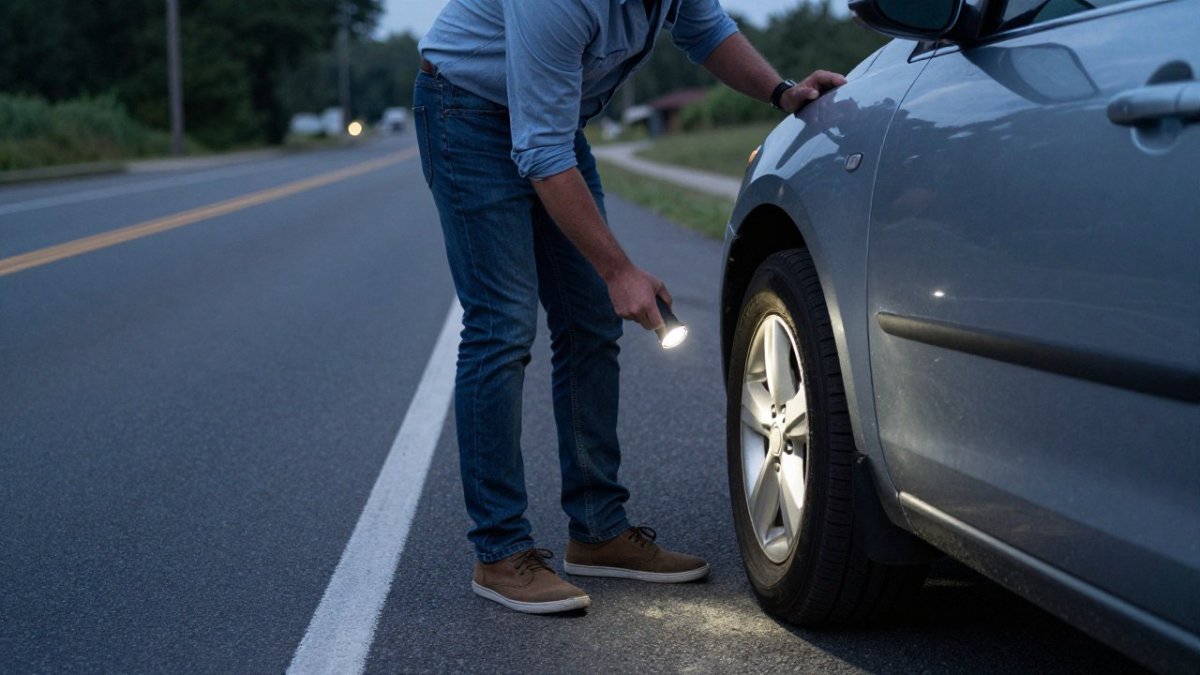
1. Slow down and hold your line. If you feel a vibration, a pull, or a sudden pressure loss, ease off the accelerator and keep the wheel steady. Do not brake hard or jerk the wheel; a damaged sidewall can fail under sudden load. Avoiding common car maintenance mistakes can also keep a bad situation from getting worse.
2. Get off the travel lane. Pull as far onto the shoulder or into a parking lot as you can. Turn on your hazard lights. If you are on a highway, stay in the vehicle with your seatbelt on and call for help rather than standing near traffic.
3. Assess the damage from outside the tire. Look for a puncture, a cut, a bulge, exposed cords, or damage near the bead where the tire meets the wheel. A bulge or exposed cords means the tire has lost structural integrity and should not be driven, even slowly.
4. Choose your next move based on severity.
- Bulge, exposed cords, or a large cut: Do not drive. Use a spare if you have one and can change it safely, or call roadside assistance or a tow.
- Small puncture with the tire holding air: Drive slowly on local roads to the nearest shop, avoiding highways. Recheck pressure before you move.
- Flat or rapidly losing air: Mount the spare or call for help. Do not use a can of sealant as a permanent fix; sealant is a temporary measure and can complicate later inspection.
5. Get a professional inspection. A technician can check the wheel and suspension for impact damage and confirm whether the tire is repairable or needs replacement. To avoid missing the visit, see how to schedule car maintenance without missing service. Visual inspection alone cannot certify a sidewall as safe.
Vehicle type matters here. A passenger car on a highway has no safe sidewall workaround; the tire should be replaced. An off-road vehicle on a trail may use a temporary plug to limp back to pavement, but that is a trail-side measure, not a road repair. A bicycle tire is a different category entirely and does not follow passenger-car repair standards.
| Situation | Recommended Action | Avoid |
|---|---|---|
| Small sidewall cut, tire holds air | Drive slowly to a shop for inspection | Highway speeds, DIY patch kit |
| Visible bulge or exposed cords | Replace the tire; use spare or call for help | Driving on it at any speed |
| Slow leak | Drive to a shop on local roads | Long-distance travel |
| Flat on the road | Use spare or call roadside assistance | Standing near traffic, sealant as a permanent fix |
Watch out: do not judge severity by the size of the visible hole. A small cut can hide cord damage underneath, and a tire that looks fine in the driveway can fail on the highway.
Booking a Professional Tire Inspection in Mesa
If you have a sidewall puncture, the safest next step is a professional inspection. A trained technician can tell you whether the tire can be repaired or whether it needs replacement. They can also check the wheel and suspension for damage from the impact.
At Performance Automotive and Tire Center, our ASE-certified technicians give you an honest assessment. You can also see trusted ASE certified mechanic shops in Mesa AZ to compare options. We offer free estimates, so you know what to expect before any work begins. Our guide to getting a car repair estimate in Mesa walks you through what to ask. We also offer free loaner cars for customers who need to keep moving while their vehicle is in the shop.
If your tire has a sidewall puncture, call us at 480-924-7444 today to schedule an inspection. Our team will tell you whether a repair is possible or whether replacement is the right choice for your safety and your budget.
Frequently Asked Questions
Is it safe to patch a sidewall on a tire?
No. Sidewalls flex constantly while the tire rolls, and that movement works a patch loose or keeps a puncture from sealing. Most tire manufacturers and industry repair standards do not allow sidewall repairs for road use, because the sidewall carries structural load and has no tread belts to reinforce it. A patch may hold air for a short time, but it does not restore the tire’s strength. Replacement is the safe option when the sidewall is punctured.
What part of a tire cannot be patched?
The sidewall and the shoulder are the areas that cannot be safely repaired. Repairs are generally limited to the center tread area, typically within the main tread grooves and not near the shoulder. Damage that extends into the sidewall, shoulder, or bead area usually requires replacing the tire. A technician checking the tire can tell you whether the damage falls within the repairable area.
Can you drive with a puncture in the tire sidewall?
Driving on a punctured sidewall is risky. The weakened area can bulge, separate, or fail suddenly, which can cause a blowout at highway speed. If the tire is losing air, drive slowly only as far as needed to reach a safe location or a repair shop, and avoid highway speeds and sharp turns. If you have a spare that fits your vehicle, switching to it is safer than continuing on the damaged tire.
Can a tire shop repair sidewall damage?
Most reputable tire shops will not repair sidewall punctures for road use, because the repair would not meet industry standards. A professional inspection is still worth it. A technician can confirm where the damage is, check the internal structure for cords and belt damage, and recommend replacement if needed. At Performance Automotive and Tire Center, our technicians inspect the damage and explain your options, and you can call 480-924-7444 or check our website for current pricing or a quote.