Last Updated: November 8, 2026
Quick Summary
Mesa Auto Works and Faith Works Auto have no single winner; the right pick depends on your vehicle, budget, and how much transparency you want before work begins. Compare both shops using written, itemized estimates, diagnostic fee policies, and warranty terms in writing rather than star ratings or hourly rates alone.
- Ask both shops the same four cost questions and write down the answers so quotes are comparable.
- A verbal estimate is not a quote; insist on a written, itemized estimate before work begins.
- Verify warranty coverage length, parts versus labor terms, and claim procedures in writing before approving work.
- Match the repair to the shop’s demonstrated capability, not its general reputation.
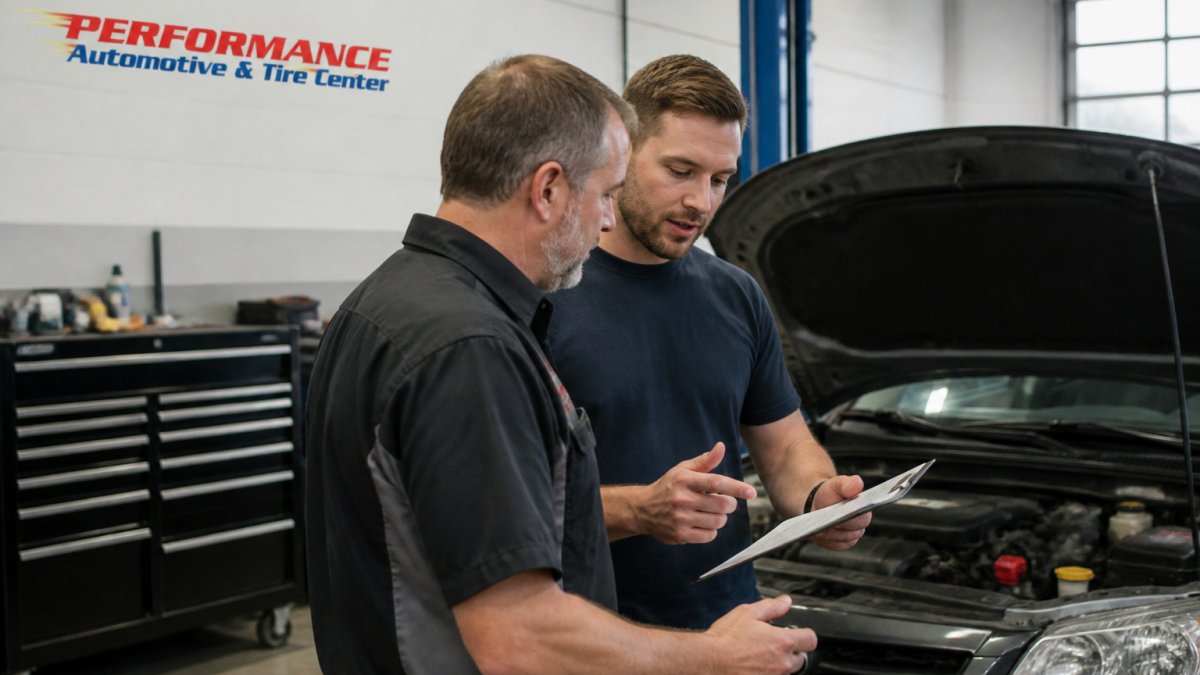
- Performance Automotive and Tire Center offers free written estimates and a nationwide warranty on repairs.
Table of Contents
- Mesa Auto Works vs Faith Works Auto: What Sets Them Apart
- Mesa Auto Works vs Faith Works Auto Reviews: What Drivers Actually Say
- Mesa Auto Works vs Faith Works Auto Price: How Costs Compare
- Auto Repair Estimate Comparison: Reading the Fine Print
- Warranty Terms and Repair-Specific Suitability
- How to Choose an Auto Repair Shop in Mesa
- Book Your Free Estimate at Performance Automotive and Tire Center
- Frequently Asked Questions
Mesa Auto Works vs Faith Works Auto: What Sets Them Apart
Choosing between Mesa Auto Works and Faith Works Auto comes down to how each shop handles estimates, warranties, and repair-specific work.
Below, we break down reviews, pricing, estimate practices, warranty terms, and repair suitability so you can decide with facts instead of guesswork. For a closer look at the alternative, see Faith Works Auto Alternative for Repairs: What to Know.
What most guides miss is that the shop you choose matters less than the estimate process you insist on. A written estimate, a clear diagnostic fee policy, and warranty coverage in writing protect you at any shop.
Mesa Auto Works vs Faith Works Auto Reviews: What Drivers Actually Say
Reviews for both shops tend to cluster around the same themes: honesty, communication, and whether the final bill matched the estimate. That pattern is useful. When you read online ratings, look past the star average and scan for specifics.
Review Themes That Matter
- Trustworthiness and honest service come up more than price in positive reviews for local shops generally.
- Customer communication is the most common complaint theme when reviews go negative, usually about surprise charges or missed callbacks.
- Turnaround time and same-day service availability show up repeatedly for commuters.
A common mistake is judging a shop by one glowing or one angry review. Read the middle-of-the-road reviews, the three-star ones, because they usually describe the real experience. Look for mentions of written estimates, diagnostic fees, and whether the technician explained the repair before starting.
Mesa Auto Works vs Faith Works Auto Price: How Costs Compare
Pricing for any repair depends on the vehicle, the diagnosis, and the parts chosen, so the most reliable comparison starts with written estimates. What you can compare is the cost structure each shop uses, because the structure, not the headline hourly rate, usually determines what you actually pay. The goal is to get two estimates that are equivalent in scope so the numbers mean something.
Build a Like-for-Like Estimate Request
When you call either shop, give both the same information so the quotes are comparable:
- Vehicle year, make, model, engine, and current mileage
- The specific symptom, not a guessed repair (for example, “grinding noise when braking at low speed” rather than “needs brakes”)
- Whether you want the diagnostic performed before any repair is authorized
A common pattern is that one shop quotes a lower number because it skipped the diagnostic step and priced a likely repair, while the other quotes the diagnostic plus the repair. Those are not the same quote. Compare the scope line by line, not the bottom line.
The Four Cost Questions That Actually Separate the Shops
Ask Mesa Auto Works and Faith Works Auto each of these, and write down the answers:
- Diagnostic fee: Is it a flat charge, an hourly charge, or waived if you approve the repair? Is it credited toward the final bill?
- Estimate format: Will the estimate be written and itemized by labor hours and parts, with taxes and shop supplies as separate lines?
- Parts tiers: Are OEM, aftermarket, and remanufactured parts priced as separate options on the same estimate?
- Re-check and second-opinion policy: If the repair does not fix the symptom, is the re-check free, and is there a charge to revisit a diagnosis?
Watch out: a verbal estimate is not a quote. If a shop will not put the numbers in writing before work begins, treat that as a signal to keep comparing.
Why Labor Rate Alone Misleads
A shop with a higher hourly labor rate but accurate diagnostics can cost less overall than a shop with a lower rate that replaces parts by trial. The mechanism is straightforward: diagnostic time is billed once when it is done well, but a misdiagnosis can trigger a second repair, a second teardown, and a second parts order. When you compare Mesa Auto Works vs Faith Works Auto, ask each shop how many labor hours the job is expected to take and whether that figure includes diagnostic time or is added on top.
What to Do With the Two Estimates
Put the estimates side by side and check three things: whether the same parts tier is being compared, whether diagnostic time is included or separate, and whether the warranty terms differ. If one estimate is materially lower, ask the shop to explain what it excluded. A legitimate lower quote will survive that question; a padded or incomplete one usually will not.
For a step-by-step walkthrough of requesting and reading estimates, see our guide on how to get a car repair estimate in Mesa. If you already have a number in hand and want to sanity-check it, our article on how to verify mechanic repair estimates covers the checks that catch padding and double-billing. The FTC’s consumer guidance on auto repairs explains your right to a written estimate and the rule that a shop cannot exceed it without your approval.
Ask both shops the same four cost questions and write down the answers so the quotes are truly comparable.
| Cost question | What to ask | Why it matters |
|---|---|---|
| Diagnostic fee | Flat, hourly, or waived if repair approved? Credited to bill? | A low quote may have skipped the diagnostic |
| Estimate format | Written and itemized by labor hours and parts? | A verbal estimate is not a quote |
| Parts tiers | OEM, aftermarket, remanufactured priced as separate options? | Compare the same parts tier side by side |
| Re-check policy | Free re-check if the repair does not fix the symptom? | Misdiagnosis can trigger a second repair and parts order |
Auto Repair Estimate Comparison: Reading the Fine Print
A repair estimate is a written, itemized projection of the parts and labor a shop expects a job to require. It should list every part, its price, the labor hours, and the diagnostic charge separately.
What a Written Estimate Should Include
- Vehicle identification and current mileage
- Each repair item with parts and labor broken out
- Parts type: OEM, aftermarket, or remanufactured
If you want a step-by-step walkthrough of the process, see our guide on how to get a car repair estimate in Mesa.
The FTC’s consumer guidance on auto repairs is clear that you are entitled to a written estimate in most states and that shops cannot exceed it without your approval. Read the estimate line by line before you sign.
Warranty Terms and Repair-Specific Suitability
Warranty coverage and repair-specific fit are the two factors that most often decide a repair outcome after the bill is paid, yet they are the least compared. The approach here is to verify warranty terms in writing and to match the job to the shop’s demonstrated capability, rather than to a brand reputation.
Warranty Terms to Verify in Writing
Ask Mesa Auto Works and Faith Works Auto for the warranty terms in writing before you approve work, and compare these specific items:
- Coverage length: How many months or miles, and does the clock start at pickup or at the repair date?
- Parts versus labor: Are both covered for the full term, or does labor coverage expire sooner than parts coverage?
- Parts tier: Does the warranty apply to aftermarket and remanufactured parts, or only to OEM parts?
A nationwide warranty matters if you commute or road-trip, because it means a covered failure can be handled away from home. For a deeper look at what these programs include and exclude, read our breakdown of what nationwide auto warranties cover.
Watch out: a warranty described verbally at the counter is not the same as warranty terms printed on the estimate or invoice. Ask for the terms on paper and keep them with your repair records.
Match the Repair to the Shop’s Capability
Repair-specific suitability is where a general reputation can mislead you. Reputation alone does not show whether a shop is the right fit for your specific job. Neither reputation tells you whether a given shop has the diagnostic equipment and technician training for your specific job.
Use this job-by-job check when you call either shop:
- Routine maintenance (oil, fluids, filters, belts): Confirm the shop uses the oil specification your owner’s manual requires and can reset maintenance reminders.
- Diagnostics and electrical faults: Ask whether the shop has factory-level or equivalent scan tools for your make, and whether it charges a separate diagnostic fee.
- Transmission work: Ask whether the shop performs transmission service in-house or sends it out, and whether it follows the manufacturer’s fluid and interval specification.
A shop that specializes in one brand may not be the best fit for a different make with an intermittent electrical fault.
Put the Two Factors Together
The strongest choice is the shop that both explains its warranty in writing and can describe, specifically, how it will diagnose and repair your job. If one shop is strong on warranty but vague on capability, or strong on capability but vague on warranty, that gap is your deciding factor.
How to Choose an Auto Repair Shop in Mesa
The best auto repair shop in Mesa is the one that gives you a written estimate, explains the diagnostic findings, and backs the work with a warranty you can read. Everything else is secondary.

Use this checklist when you visit any shop:
- Are the technicians ASE certified?
- Is the estimate free and written?
- Do they offer loaner cars or same-day service?
For a fuller framework, our guide to choosing a reliable local mechanic walks through credentials, equipment, and questions to ask.
Red Flags to Watch For
- Pressure to approve work before you see the estimate
- No written warranty terms
- Refusal to show you the failed part
Book Your Free Estimate at Performance Automotive and Tire Center
Comparing shops is smart, and we would rather you choose with clear information than guess. At Performance Automotive and Tire Center, our ASE-certified technicians provide free written estimates, honest assessments without up-selling, and a nationwide warranty on repairs.
The hardest part of choosing a shop is trusting the estimate in front of you. We built our process around that moment: free written estimates, ASE-certified diagnostics, free loaner cars, and a nationwide warranty that travels with you.
Frequently Asked Questions
How do Mesa Auto Works and Faith Works Auto compare?
Both are independent shops serving Mesa and the East Valley, but they differ in what they emphasize. Each shop has its own approach, so compare them on the factors that matter to you. The right choice depends on your repair type, whether you want a written estimate before work begins, and how the warranty terms compare. Ask each shop for a written estimate and warranty details in writing before committing.
What should I look for in Mesa auto works vs faith works auto reviews?
Read reviews for patterns, not single stars. Look for repeated mentions of accurate diagnostics, repair turnaround time, and whether the final bill matched the written estimate. Check how recent the reviews are and whether the shop responds to criticism. Reviews that name a specific repair, like brake service or air-conditioning repair, tell you more than generic praise. Compare themes across both shops rather than counting stars.
How do I compare auto repair estimates from two shops?
Line up the estimates side by side and check three things: whether both list the same parts (new, remanufactured, or OEM), whether labor hours match the job, and whether diagnostic fees are separate or credited toward the repair. A lower total with vague line items is not a better deal. Ask each shop to explain any difference in approach before you approve the work, and confirm the warranty coverage in writing.
Should I get a second opinion on a car repair estimate?
Yes, especially for repairs over a few hundred dollars or anything described as urgent. A second opinion from an ASE-certified shop can confirm the diagnosis and show whether the recommended work is necessary now or can wait. Bring the first written estimate with you so the second shop can compare line by line. Free estimates make this easy, and a shop confident in its diagnosis will not pressure you to skip it.