
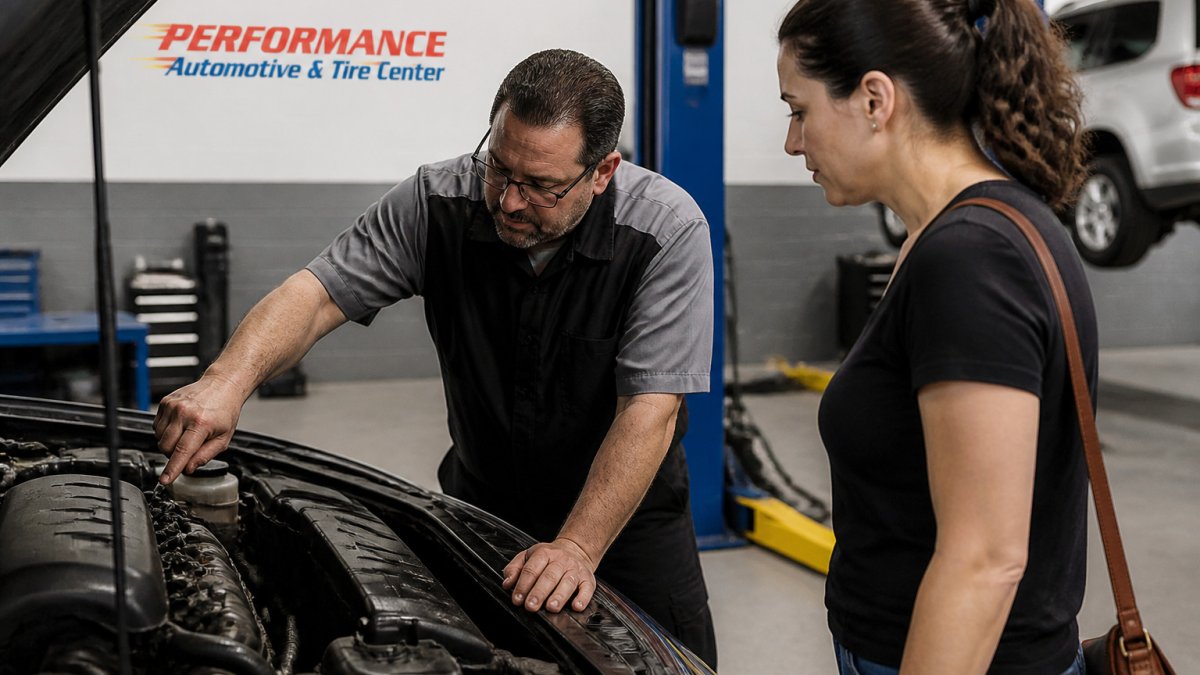
Last Updated: November 2, 2026
Quick Summary
Independent shops are often cheaper than dealerships because they carry lower overhead, with no large showroom and fewer non-billable staff, which usually means a lower hourly labor rate. The gap comes from how each business is built, not from the quality of the work. Compare estimates line by line before deciding.
- Dealership quotes often carry facility, staffing and manufacturer-program costs that independent shops may not have.
- Compare labor rate, labor hours, parts source and shop fees separately rather than just the total.
- Independent shops typically offer both OEM and aftermarket parts, which can lower repair costs.
- Ask whether the diagnostic fee is credited toward the repair if you approve the work.
- Using an independent shop generally will not void your manufacturer warranty under the Magnuson-Moss Warranty Act.
Table of Contents
- Why Independent Shops Often Charge Less Than Dealerships
- Where Dealership Prices Come From: Overhead, Labor Rates and Facilities
- Parts, Equipment and Technician Training: What You Actually Get
- How to Compare Mechanic Repair Estimates Side by Side
- Questions to Ask a Mechanic Before Approving Repairs
- Will an Independent Shop Void Your Warranty?
- When Dealership Service Is Worth the Premium
- Booking Your Next Repair at Performance Automotive and Tire Center
- Frequently Asked Questions
Why Independent Shops Often Charge Less Than Dealerships
Independent shops are often cheaper than dealerships because their overhead is lower, and they are not paying for a showroom. Drivers regularly compare a dealer quote with an independent shop quote, and the gap is often wide enough to matter. See a direct cost comparison of dealer and independent prices The difference usually comes from how each business is built, not from the quality of the work.
Price is not the only factor, though. A lower quote only helps if the repair is done correctly. This guide explains where dealership prices come from, what you actually get for the money, and how to compare estimates so you can choose with confidence.
Let’s start with the basics.
Where Dealership Prices Come From: Overhead, Labor Rates and Facilities
A dealership repair bill is built from several cost layers, and understanding them is a useful way to see why the same job can carry two very different prices. The gap is rarely one big number. It is a stack of smaller ones.
1. Facility and fixed costs. A dealership service department typically sits on a large parcel with a showroom, a service drive, a customer lounge, and manufacturer-mandated signage and tooling. Those costs are fixed: they are owed whether the bays are full or empty. Smaller footprints with fewer non-revenue spaces mean each repair hour can carry less fixed cost.
2. Labor rate. Most repair bills are calculated as labor hours multiplied by the shop’s hourly rate. Dealership rates are often higher, particularly in metro areas, because the rate has to cover the facility, the front-of-house staff, and manufacturer training requirements. A difference of even a modest amount per hour compounds on a multi-hour job: a job billed at several hours carries the per-hour gap several times over.
3. Staffing structure. Dealerships commonly employ a range of non-technician staff in addition to technicians. Fewer non-billable roles means less overhead loaded into each ticket.
4. Manufacturer programs and compliance. Franchise agreements can require specific equipment, special tools, training, and facility standards. Those requirements protect quality on brand-specific work, but they are not free, and the cost is recovered through labor rates and shop fees.
5. Parts markup and sourcing. Dealerships generally sell OEM parts sourced through the manufacturer’s distribution network. Independent shops may source OEM parts through dealers or distributors and may also offer aftermarket alternatives.
Bureau of Labor Statistics automotive service technician data
The practical point is not that dealerships are overpriced. It is that a dealership quote is carrying costs an independent shop may not have. When you compare two estimates, compare the labor rate, the labor hours, the parts source, and the shop fees separately. That is where the difference actually lives.
The gap between a dealership quote and an independent shop quote usually comes down to a few cost layers that can be compared directly.
| Cost layer | What it covers | Why it can differ |
|---|---|---|
| Facility and fixed costs | Showroom, service drive, lounge, signage | Fixed costs owed whether bays are full or empty |
| Labor rate | Hourly charge applied to repair hours | Dealer rates often higher, especially in metro areas |
| Staffing structure | Non-technician roles | Fewer non-billable roles means less overhead per ticket |
| Manufacturer programs | Required equipment, tools, training, facility standards | Recovered through labor rates and shop fees |
| Parts sourcing | OEM parts via manufacturer network | Independents may offer OEM or aftermarket options |
Parts, Equipment and Technician Training: What You Actually Get
Higher prices do not automatically mean better repairs. Dealerships often use OEM parts, which are made by or for the vehicle manufacturer. Independent shops typically offer both OEM and aftermarket parts, which can lower the cost of a repair. Automotive Service Association guidance on parts choices
Technician training is where the comparison gets more nuanced. Dealership technicians usually receive factory training on specific makes. At Performance Automotive and Tire Center, our technicians are ASE certified.
Diagnostic equipment matters as well. When evaluating a shop, the right question is whether it has the equipment and experience for your specific vehicle.
How to Compare Mechanic Repair Estimates Side by Side
Most price comparisons fail because the two quotes are not for the same work. One estimate bundles a diagnostic fee into the repair; the other lists it separately. One uses OEM parts; the other uses aftermarket. One quotes labor by the job; the other quotes by the hour. To compare fairly, break every estimate into the same four lines: parts, labor (hours x rate), diagnostic fee, and shop fees. Use this guide to verify each estimate’s line items
Here is how that breakdown tends to look across common repair types. Rates and parts costs vary by vehicle, region, and shop.
Call us at 480-924-7444 today! →
Brake pad and rotor replacement (per axle).
- Parts: pads and rotors, OEM vs. quality aftermarket. This is usually the largest single line and the one most affected by parts choice.
- Labor: typically quoted as a fixed job time rather than raw hours.
- Diagnostic fee: usually none, since the symptom is obvious.
- Shop fees: sometimes a small environmental or disposal fee.
Battery replacement.
- Parts: battery, plus any registration or coding required on vehicles that monitor battery state.
- Labor: short, but coding can add time on some models.
- Diagnostic fee: often waived if the shop sells the battery.
- Shop fees: usually minimal.
Check-engine-light diagnosis.
- Parts: none until the cause is confirmed.
- Labor: diagnostic time, often billed as a flat fee.
- Diagnostic fee: this is the line to compare closely. Ask whether it is credited toward the repair if you approve the work.
- Shop fees: varies.
Timing belt or water pump job.
- Parts: belt, tensioner, pump, coolant, and related seals.
- Labor: the largest line on the ticket, and the one where per-hour rate differences compound most.
- Diagnostic fee: usually none.
- Shop fees: coolant disposal may apply.
Air conditioning recharge and leak repair.
- Parts: refrigerant, seals, and any failed component.
- Labor: evacuation, recharge, and leak testing.
- Diagnostic fee: leak detection is often billed separately.
- Shop fees: refrigerant handling fees may apply.
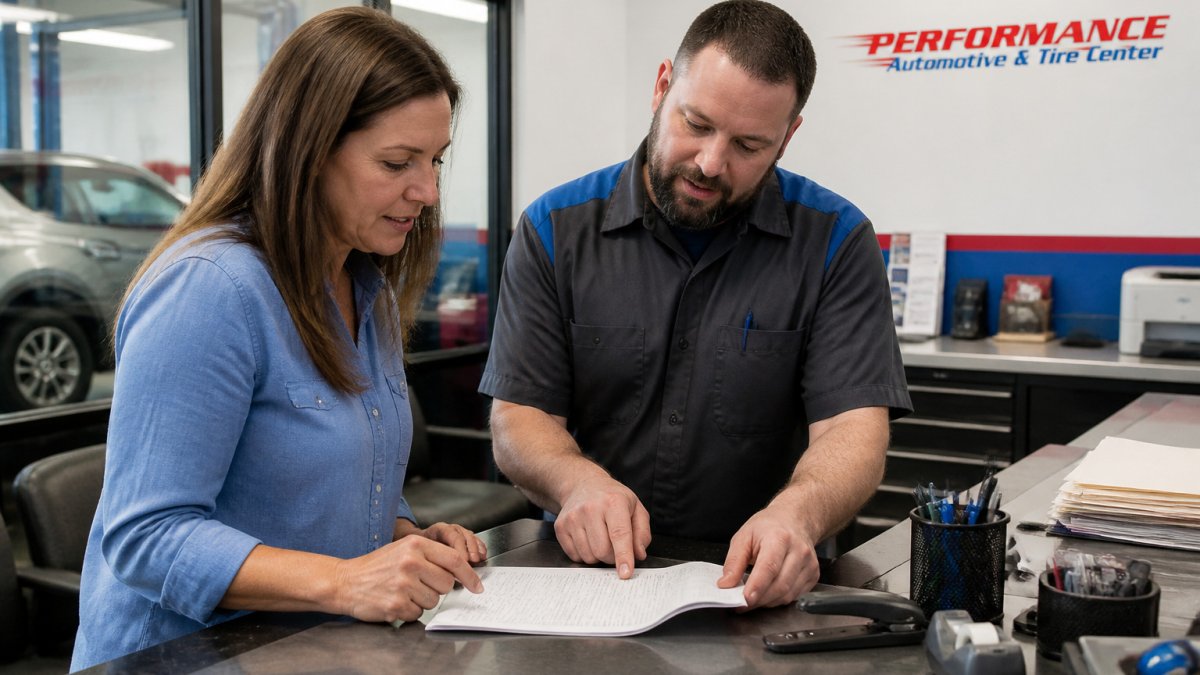
A Repeatable Quote-Comparison Process
Use the same steps every time:
- Describe the symptom and the vehicle, including year, make, model, and mileage.
- Request an itemized written estimate from each shop.
- Check that each estimate covers the same parts and labor.
- Compare labor hours, not just the total.
- Ask what warranty applies to the parts and the labor.
- Confirm whether the diagnostic fee is credited toward the repair.
- Ask whether the parts are OEM, aftermarket, or remanufactured, and get the brand name.
A lower total is not automatically the better deal. A quote that omits a needed part, skips a required relearn or calibration, or carries no workmanship warranty can cost more over the life of the repair. Compare the scope first, then the price.
At Performance Automotive and Tire Center, estimates are free.
Questions to Ask a Mechanic Before Approving Repairs
Before you say yes to any repair, ask: Learn the warning signs of overcharging
- What exactly is wrong, and how was it diagnosed?
- Are the parts OEM or aftermarket, and what does each option cost?
- How many labor hours are quoted, and what is the shop rate?
- Is a diagnostic fee charged, and does it apply toward the repair?
- What warranty covers the work?
A good shop answers these clearly and does not pressure you to decide on the spot.
Will an Independent Shop Void Your Warranty?
Many drivers worry that using an independent shop will cancel their manufacturer warranty. In most cases it will not. See exactly which repairs and coverage your warranty still protects FTC guidance on warranty and independent repair The federal Magnuson-Moss Warranty Act generally prevents a manufacturer from voiding a warranty just because you used an independent shop, unless the manufacturer proves the outside repair caused the problem.
Keep your service records and receipts, and make sure any parts used meet the vehicle’s requirements. For warranty-covered repairs, check with the manufacturer before you authorize the work.
When Dealership Service Is Worth the Premium
Dealerships can be the right choice for some situations. Repairs covered under an active factory recall are usually free at the dealer.
For many routine maintenance and common repairs, a qualified independent shop can be a practical option.
Booking Your Next Repair at Performance Automotive and Tire Center
If you are comparing shops in Mesa, Performance Automotive and Tire Center offers free estimates, free loaner cars, and a nationwide warranty. Our ASE-certified technicians aim to give honest assessments. Call us at 480-924-7444 today to schedule your next repair, or .
Frequently Asked Questions
Why are independent auto repair shops often cheaper than dealerships?
Independent shops usually carry lower overhead than dealerships, which often run large showrooms, separate sales staff and higher facility costs. Many independents also charge lower hourly labor rates than dealer service departments for comparable work. They may offer aftermarket or OEM-equivalent parts at lower markups. Prices still vary by shop, vehicle and repair complexity, so compare written estimates for the same job before deciding.
Are independent mechanics as qualified as dealership technicians?
Qualification varies by shop, so verify it rather than assuming. Look for ASE certification, which tests specific repair areas, and ask whether technicians have training on your vehicle’s make. Dealership technicians receive factory training on their brand, which can matter for complex electrical or software issues. A good independent shop should explain its diagnostic process and show you the problem before approving work.
Will using an independent mechanic void my vehicle warranty?
Using an independent shop for routine maintenance does not void your new-car warranty under U.S. federal law, the Magnuson-Moss Warranty Act. A manufacturer generally cannot require dealer service to keep coverage, though it can deny a claim caused by faulty work or parts. Keep receipts showing that maintenance was performed on schedule and with appropriate parts. Ask the shop whether its work carries a workmanship warranty and what that covers.
How can I compare an independent shop’s estimate with a dealer’s?
Request written estimates from both for the same repair, using the same parts specification and labor hours. Ask whether each price includes parts, labor, shop fees and taxes. Compare the diagnostic fee separately, since some shops apply it toward the repair. Ask each provider to explain why any line item differs. A transparent shop will walk you through the estimate without pressure.


