

Last Updated: November 26, 2026
Quick Summary
To learn how to choose the right tires for your car, start by confirming the size on your door-jamb placard, then match the tire type to your climate and driving. Check that the load index and speed rating meet or exceed the placard, and replace tires once tread is too worn or the tires are about six years old.
- Confirm your tire size on the door-jamb placard, which reflects the size your car left the factory with.
- Never choose a load index lower than your car requires; a higher one is acceptable.
- Summer tire compounds stiffen and lose grip below about 45°F, a rough guide for when to consider winter tires.
- Use the penny test: if you can see all of Lincoln’s head in the groove, replace the tire.
- Compare tires by total cost per mile, including installation, balancing, and realistic tire lifespan.
Table of Contents
- How do I choose the right tires for my car?
- Find My Tire Size by Make and Model
- Reading Tire Sidewall Markings and Load Index and Speed Rating
- Comparing All-Season, Summer, and Winter Tires for Your Climate
- Tire Tread Depth and When to Replace Tires
- Questions to Ask When Buying Tires
- Booking Your Tire Fitting and Installation at Performance Automotive and Tire Center
- Frequently Asked Questions
How do I choose the right tires for my car?
Learning how to choose the right tires for your car starts with knowing your tire size, your driving conditions, and your climate. Performance Automotive and Tire Center helps drivers make this decision.
Most people shop for tires by price or by brand name. That is backward. Start with what your car needs, then choose the tire that fits those needs.
Here is the short version:
- Find the tire size your car came with.
- Decide what kind of driving you do most.
- Pick a tire type that matches your climate.
Keep reading for the details behind each step.
Find My Tire Size by Make and Model
Your tire size is the first thing to confirm when you work out how to choose the right tires for your car. A tire that is even slightly the wrong size can affect braking, handling, and the accuracy of your speedometer.
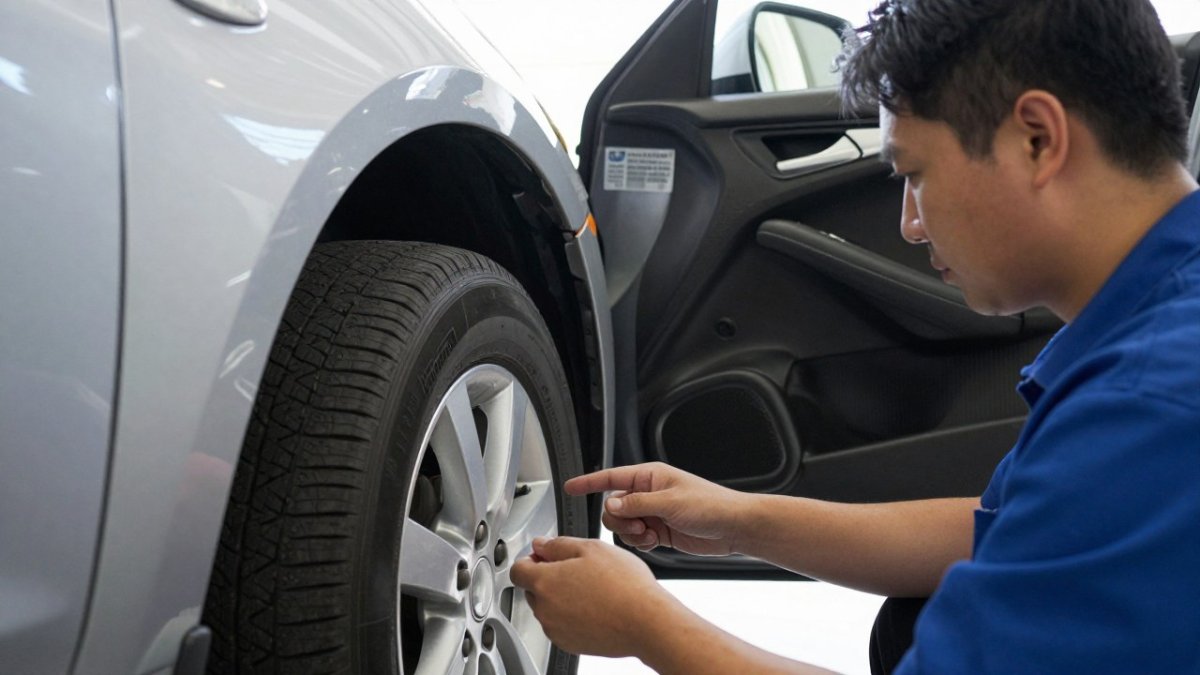
The fastest way to find your size is to read the sidewall of your current tire. Look for a code that looks something like P215/65R16. Each part means something:
- P stands for passenger vehicle.
- 215 is the tire width in millimeters.
- 65 is the aspect ratio, the height of the sidewall as a percentage of the width.
If the tire is worn or damaged, check the other sources below.
Checking the Owner’s Manual and Door-Jamb Placard
The owner’s manual lists the tire size and the recommended tire pressure for your vehicle.
Use the placard over any other source when they disagree. The placard reflects the size your car left the factory with.
Watch out: the sticker on the door frame can show a different size than the tire currently on the car. Confirm the size against the placard before you buy.
Reading Tire Sidewall Markings and Load Index and Speed Rating
The sidewall holds more information than the size alone. Learning to read it helps you compare tires side by side.
Look for these markings:
- Load index: a number such as 94 that shows how much weight each tire can carry.
- Speed rating: a letter such as H or V that shows the fastest speed the tire is rated for.
- Tread wear, traction, and temperature grades: a UTQG code that rates expected tread life and basic performance.
Never go below the load index your car requires. A higher load index is fine.
The speed rating works the same way. Match it to or go above the rating on the placard.
The date code matters too. Tires age even when they sit unused.
Comparing All-Season, Summer, and Winter Tires for Your Climate
Tire type matters as much as size. Each category is built from a different rubber compound and tread pattern, and those two design choices drive every trade-off you will feel behind the wheel.
| Tire Type | Best For | Strengths | Trade-Offs |
|---|---|---|---|
| All-season | Mild climates, mixed driving | Quiet, long tread life, good year-round use | Less grip in heavy snow or extreme heat |
| Summer (performance) | Warm, dry roads, sporty driving | Strong dry and wet grip, sharp handling | Poor traction in snow and cold weather |
| Winter | Snow, ice, and cold temperatures | Excellent cold-weather grip | Wears faster in warm weather, noisier on dry roads |
| All-weather (three-peak mountain snowflake) | Variable climates with occasional snow | Year-round use with certified snow traction | Firmer ride and faster wear than a pure all-season |
What actually separates the three types
Summer tires use a softer rubber compound that stays pliable at high pavement temperatures, plus wide, shallow grooves and large tread blocks that put more rubber on the road.
Winter tires use a compound engineered to stay flexible in cold weather, cut with thousands of small slits called sipes.
All-season tires split the difference with a compound and tread pattern tuned for a broad temperature range.
The 45°F rule of thumb
Tire makers often describe a rough temperature range, around 45°F, where summer and winter compounds perform differently. Below that, summer-tire compounds stiffen and lose grip, while winter tires keep their flexibility. All-season tires work across a wider band but give up peak grip at both ends. If your winter mornings routinely dip below 45°F, that is the signal to think about a second set of wheels rather than stretching one set of all-seasons through the year.
Choosing for a mixed or variable climate
Many drivers do not live in a single climate. A region with hot, dry summers and occasional snow or ice in winter is the hardest case, and it is where the standard all-season/summer/winter advice breaks down. Three practical paths:
- One set of all-weather tires with the three-peak mountain snowflake symbol, if snow is occasional and you want to avoid seasonal swaps.
- Two sets, summer or all-season plus winter, if snow and ice are regular and you can store a second set. Swapping on the same wheels twice a year costs money; a dedicated winter wheel set makes the change cheaper over time.
- All-season year-round only if winters are mild and snow is rare. Be honest about how often you actually drive in snow before you commit.
Watch out: an all-season tire that has worn to half its tread depth performs noticeably worse in snow than a new one, so “all-season” is not a permanent answer in a variable climate.
Matching the tire to how you actually drive
Climate is only half the decision. Ask yourself three questions: How many miles do I drive a year? Do I tow or carry heavy loads? Do I care more about ride comfort or steering response?
Ask your tire technician which tire type fits your local conditions, and confirm the recommendation against the load index and speed rating on your door-jamb placard before you buy.
Tire Tread Depth and When to Replace Tires
Tread depth controls how well your tire grips wet and dry roads. As tread wears down, stopping distances grow longer, especially in rain.
A simple check is the penny test. Place a penny upside down in the tread groove.
Tread depth is not the only sign of trouble. Replace tires promptly if you see:
- Cracks or bulges on the sidewall
- Uneven wear across the tread
- Vibration at highway speed
Tires that have sustained sidewall damage often cannot be safely repaired.
If the tire pressure light stays on after you add air, the problem may not be solved by air alone.
Questions to Ask When Buying Tires
Before you buy, ask the shop these questions:
- Is this size and load index the correct match for my vehicle?
- Which tire type suits my driving and climate?
- What is the tread life and warranty for this tire?
Those questions get you a fair quote. The next step is judging real value, which means looking past the sticker price at what the tire will cost you over its whole life.
Build a total cost of ownership estimate
The purchase price is only the first line. A realistic comparison adds up four things:
- Purchase price per tire, multiplied by four.
- Installation and balancing, which many shops quote separately from the tire price. Ask whether mounting, balancing, valve stems, and disposal of the old tires are included or added at checkout.
- Expected lifespan, measured against the tire’s mileage warranty and your annual miles. A tire rated for 60,000 miles that you replace at 40,000 costs more per mile than its sticker suggests.
- Ongoing maintenance, rotations, rebalancing, and any road-hazard coverage, plus the cost of a second set if you run seasonal tires.
A simple way to compare: divide the all-in cost (tires plus installation) by the realistic miles you expect to get. That per-mile figure exposes tires that look cheap up front but wear out early. A common pattern is that a low-priced tire with a short mileage warranty ends up costing more per mile than a pricier tire with a longer one.
Read the warranty before you rely on it
Tread-life warranties are not refunds. They typically cover tread wear for a set number of miles, and they usually require proof that you rotated the tires on schedule and kept them properly inflated. Missing those steps can void coverage. Ask these follow-ups:
- What rotation interval does the warranty require, and do I have to service the tires at this shop to keep it valid?
- Is the warranty prorated, and how is the credit calculated?
- Does it cover road hazards such as nails, potholes, and sidewall damage, or only manufacturing defects?
Ask for the warranty terms in writing before you commit, and keep your rotation receipts. Review common maintenance mistakes that shorten tire life so you do not void your coverage.
Confirm fitment when changing size or wheel diameter
If you are considering a different size or a larger wheel, ask the shop to verify fitment rather than assuming a plus-size will work. Changing the wheel diameter while keeping the overall tire height close to stock is called plus-sizing, and it can be appropriate, but it changes load capacity, speedometer accuracy, and clearance.
Watch out: a shop that quotes a tire price without listing mounting, balancing, and disposal fees is not giving you a number you can compare against another shop’s all-in quote.
Booking Your Tire Fitting and Installation at Performance Automotive and Tire Center
Once you know your size, type, and budget, the next step is installation.
The shop provides free estimates, so you can see the cost before you commit.
Our ASE-certified technicians are trained to check fitment against your vehicle. Compare highly rated auto repair shops in Mesa before you book if you want to see how local options stack up.
To book your tire fitting, call 480-924-7444 today. Follow a simple method for scheduling car service around your routine if you want to plan the appointment in advance.
Ready to choose the right tires for your car? Performance Automotive and Tire Center gives you honest, ASE-certified advice on size, type, and fit.
Frequently Asked Questions
Is $1,000 too much for four new tires?
It depends on the vehicle, tire category, and size. Premium all-season or performance tires for larger vehicles often cost more than budget options for compact cars. Pricing depends on quantity, dates, and delivery, and it also varies with installation, balancing, and alignment. For current prices or a quote, contact Performance Automotive and Tire Center directly. Compare the total installed cost and the tread life warranty, not just the sticker price per tire.
Do I need to replace tires at 4/32 of an inch?
Many drivers replace tires when tread reaches 4/32 of an inch, because wet-road traction and braking distance decline noticeably below that point. The legal minimum in most states is 2/32 of an inch, but that is a floor, not a recommended replacement point. Check tread depth with a penny or a tread depth gauge across several spots on each tire. Uneven wear can also signal alignment or inflation problems that should be fixed before new tires are installed.
How do I find the right tire size for my car?
Start with the tire size printed on the sidewall of your current tires, or check the door-jamb placard and the owner’s manual. The placard lists the manufacturer-recommended size, load rating, and tire pressure. A size such as P225/65R17 99T breaks down into tire width, aspect ratio, construction, wheel diameter, load index, and speed rating. Stay with the manufacturer-specified size unless a qualified technician confirms that an alternate size fits your wheels and clears your suspension.
What questions should I ask when buying tires?
Ask whether the tires are the exact size and load index recommended for your vehicle, what the tread life warranty covers, and whether the price includes mounting, balancing, valve stems, and disposal of old tires. Ask how the tire performs in wet and winter conditions if you drive in those environments, and whether the shop will inspect your alignment and suspension. A reputable shop should explain the trade-offs clearly without pressuring you toward a more expensive option.


